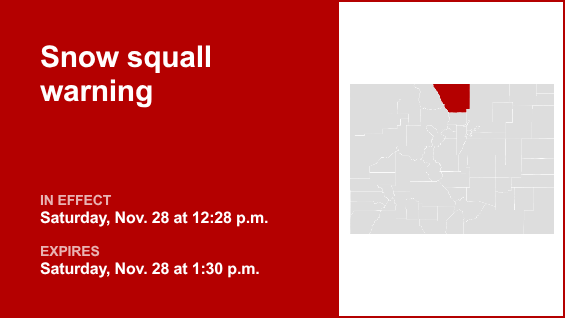
On Saturday at 12:28 p.m. the National Weather Service issued a snow squall warning in effect until 1:30 p.m. for Larimer County.
“At 12:28 p.m., a dangerous snow squall was located 5 miles northeast of Kinikinik, or 35 miles northwest of Fort Collins, moving southeast at 40 mph,” says the NWS. “Dangerous and life-threatening travel conditions are expected to develop rapidly in the warning area.”
Locations impacted by the warning include Kinikinik, Rustic, Red Feather Lakes and Mishawaka.
The NWS states, “Slow Down! Rapid changes in visibility and road conditions are expected with this dangerous snow squall. Be alert for sudden whiteout conditions. Wet roadways will quickly freeze. Black ice will cause roads, bridges and overpasses to become slick and dangerous. Slow down and be prepared for sudden loss of traction.”
Hazards include flash freeze on roads and rapidly falling visibility due to intense bursts of heavy snow and gusty winds. Wind gusts greater than 50 mph could knock down tree limbs and blow around unsecured objects.
Snow squalls: Risks, differences, and safety seasures
What are snow squalls?
Snow squalls are brief but intense winter weather events often linked to strong cold fronts. They can cause sudden white-out conditions and icy roads within minutes, even if there’s no major winter storm happening. While they usually last less than an hour and might only result in minor snow accumulation, they pose significant risks to drivers due to reduced visibility, gusty winds, and rapidly falling temperatures. These conditions have historically led to deadly traffic accidents.
What is the difference between a snow squall and a snowstorm?
The difference between a snow squall and a snowstorm is the duration of the event. Snow squalls are usually very short-lived (on the order of 30-60 minutes) and extremely intense. A snowstorm could last for several hours or even days.
Snow squall warnings
Snow squall warnings are short-fused and focused on distinct areas (like tornado and severe thunderstorm warnings). These warnings provide critical, highly localized life-saving information. If a snow squall warning is issued for your area, avoid or delay motor travel until the squall passes through your location.
Actions to take
In response to a snow squall warning, individuals should follow the guidelines provided by the NWS, which encompass the following key actions:
Avoid or delay travel: If a snow squall warning is issued for your vicinity, it’s advisable to postpone or refrain from motor travel until the squall has passed through your area. Highways and roads are particularly hazardous during snow squalls.
Reduce speed and increase visibility: If you are already in transit and cannot exit the road in time, reduce your speed, turn on your headlights and hazard lights.
Maintain safe distance: Ensure there is ample distance between your vehicle and the one ahead of you. This precaution is essential to account for reduced visibility and the potential unpredictability of road conditions during a squall.
Avoid abrupt braking: It’s also best not to slam on your brakes. With slick/icy roads, this could contribute to the loss of vehicle control and also increase the risk of a chain reaction crash.
Winter weather safety tips: For comprehensive guidelines on how to stay safe before, during, and after encountering winter weather conditions, visit the NWS Winter Weather Safety page. This resource offers valuable insights and precautions to help you navigate the challenges posed by winter weather effectively.
Prepare your vehicle: Prior to hitting the road this winter, ensure your vehicle is winter-ready by inspecting tires, brakes, and lights, and confirming all fluids are at appropriate levels. A properly maintained vehicle is more capable of navigating the demands of winter roads.
Essential items for your car’s emergency kit: Ensure your vehicle is equipped with a comprehensive emergency kit, featuring essentials such as blankets, non-perishable food, water, a flashlight, and a first-aid kit. Don’t forget to add jumper cables, flares or a reflective triangle, an ice scraper, a car cell phone charger, a map, and cat litter or sand to enhance tire traction. These provisions can prove invaluable in the event of an unforeseen breakdown or emergency during your journey.
In conclusion, when faced with a snow squall warning, prioritizing personal safety and adhering to the NWS recommendations can significantly mitigate risks. By understanding, preparing, and staying vigilant, individuals can navigate these winter hazards with greater confidence and security.
Source: The National Weather Service