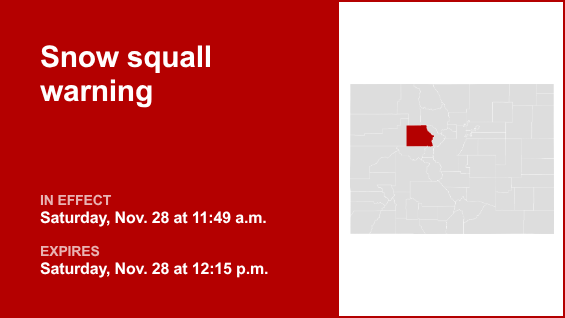
On Saturday at 11:49 a.m. the National Weather Service released a snow squall warning in effect until 12:15 p.m. for Eagle County.
“At 11:49 a.m., A dangerous snow squall was located along a line from 8 miles east of Vail to 5 miles south of Avon, or along a line from 60 miles east of Glenwood Springs to 43 miles east of Glenwood Springs, moving southeast at 35 mph,” adds the NWS. “Dangerous and life-threatening travel conditions are expected to develop rapidly in the warning area.”
The warning is for Areas along I-70 from Avon to Vail Pass.
The NWS states, “Slow Down! Rapid changes in visibility and road conditions are expected with this dangerous snow squall. Be alert for sudden whiteout conditions. Wet roadways will quickly freeze. Black ice will cause roads, bridges and overpasses to become slick and dangerous. Slow down and be prepared for sudden loss of traction.”
Hazards include flash freeze on roads and whiteout conditions with near zero visibility due to intense bursts of heavy snow and gusty winds. Wind gusts greater than 35 mph.
The snow squall guide: Preparation and caution on winter roads
What are snow squalls?
Snow squalls are intense winter weather events often associated with strong cold fronts. They can quickly blanket roads with snow and ice, even without a major winter storm in the forecast. Typically lasting less than an hour and resulting in minor snow accumulation, these squalls can still be dangerous due to reduced visibility, gusty winds, and rapidly dropping temperatures. Unfortunately, these conditions have historically contributed to serious and sometimes fatal traffic accidents.
What is the difference between a snow squall and a snowstorm?
The main distinction between a snow squall and a snowstorm lies in their duration and intensity. Snow squalls are typically brief but intense, lasting around 30-60 minutes. In contrast, a snowstorm can stretch over several hours or even days
Snow squall warnings
Snow squall warnings are rapidly issued for specific areas, much like tornado or severe thunderstorm warnings. They offer crucial, localized information aimed at saving lives. If an alert for a snow squall is issued in your area, it’s best to postpone or avoid driving until the squall moves on.
Actions during a snow squall warning
In response to a snow squall warning, individuals should follow the guidelines provided by the NWS, which encompass the following key actions:
Avoid or delay travel: If a snow squall warning is issued for your vicinity, it’s advisable to postpone or refrain from motor travel until the squall has passed through your area. Highways and roads are particularly hazardous during snow squalls.
Reduce speed and increase visibility: If you find yourself already on the road during a snow squall, prioritize safety by reducing your speed. Turn on both your headlights and hazard lights to enhance visibility for yourself and other drivers.
Maintain safe distance: Ensure there is ample distance between your vehicle and the one ahead of you. This precaution is essential to account for reduced visibility and the potential unpredictability of road conditions during a squall.
Avoid abrupt braking: In slippery and icy conditions, sudden braking can lead to loss of vehicle control. It’s safer to slow down gradually to minimize the risk of skidding or causing a chain reaction crash.
Winter weather safety tips: For tips on how to stay safe before, during, and after winter weather, visit the NWS Winter Weather Safety page.
Prepare your vehicle: Prior to hitting the road this winter, ensure your vehicle is winter-ready by inspecting tires, brakes, and lights, and confirming all fluids are at appropriate levels. A properly maintained vehicle is more capable of navigating the demands of winter roads.
Emergency kit essentials: Always have a well-prepared emergency kit in your vehicle containing crucial supplies like blankets, non-perishable food, water, a flashlight, and a first-aid kit. Additionally, include jumper cables, flares or a reflective triangle, an ice scraper, a car cell phone charger, a map, and cat litter or sand for improved tire traction. These items can be invaluable should you encounter an unexpected breakdown or emergency while on the road.
In conclusion, when faced with a snow squall warning, prioritizing personal safety and adhering to the NWS recommendations can significantly mitigate risks. By understanding, preparing, and staying vigilant, individuals can navigate these winter hazards with greater confidence and security.
Source: The National Weather Service