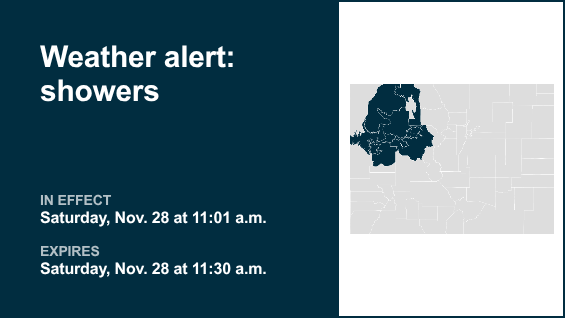
A report from the National Weather Service was issued on Saturday at 11:01 a.m. for showers until 11:30 a.m. for Northwest Colorado.
Residents may experience wind gusts of up to 50 mph.
“At 11:01 a.m., Doppler radar tracked a line of showers extending from 9 miles north of Gypsum to 18 miles south of Meeker, or extending from 27 miles northeast of Glenwood Springs to 38 miles northwest of Glenwood Springs, moving south at 30 mph,” according to the NWS. “Gusty winds could knock down tree limbs and blow around unsecured objects.”
Locations impacted by the alert include Glenwood Springs, Rifle, Eagle, Gypsum, New Castle, Silt, Rio Blanco, Buford, Shoshone, Dotsero and Sweetwater.
The NWS adds, “Monitor the weather situation closely and be alert for threatening weather conditions.”
The full list of affected locations includes:
• Central Yampa River Basin
• Roan and Tavaputs Plateaus
• Elkhead and Park Mountains
• Debeque to Silt Corridor
• Central Colorado River Basin
• Grand and Battlement Mesas
• Gore and Elk Mountains/Central Mountain Valleys
• Flat Tops
Rainy day rules: How to stay safe in heavy precipitation
Heavy rainfall may lead to flooding if prolonged or if there is excessive runoff. Excessive runoff can be a result of saturated ground and/or rainfall intensity. Follow these recommendations from the NWS to stay safe in heavy rain:
Beware of swollen waterways:
• Do not play in or around culverts or drainage ditches as swiftly moving water that occurs during heavy rain can sweep you away.
Maintain safe driving distances:
• Use the two-second rule to maintain a safe distance from the car in front of you and allow an extra two seconds in heavy rain.
Slow down and stay cautious:
• If it is raining and the roads are wet, slow down. Take your foot off the accelerator and let your speed drop gradually. Never use the brakes suddenly because this may cause the car to skid.
Choose your lane wisely:
• Stay toward the middle lanes – water tends to pool in the outside lanes.
Visibility matters:
• Turn on your headlights.
• Be careful of other vehicles to the rear and in blind spot areas as they are especially difficult to see through rain-spattered windows.
Watch out for slippery roads:
• Be extra careful during the first half hour after rain begins. Grime and oil on the road surface mix with water to make the road slippery.
Keep a safe distance from large vehicles:
• Don’t follow large trucks or buses too closely. The spray created by their large tires reduces your vision. Take care when passing them as well; if you must pass, do so with caution.
Mind your windshield wipers:
• Heavy rain can overload the wiper blades. When visibility is so limited that the edges of the road or other vehicles cannot be seen at a safe distance, it is time to pull over and wait for the rain to ease up. It is best to stop at rest areas or other protected areas. If the roadside is your only option, pull off as far as possible, preferably past the end of a guard rail, and wait until the storm passes. Keep your headlights on and turn on emergency flashers to alert other drivers.
By following these safety measures, you can significantly reduce risks and ensure your well-being when heavy rain pours down. Stay informed about weather conditions and heed advice from local authorities to make your journey safe and sound.
Source: The National Weather Service