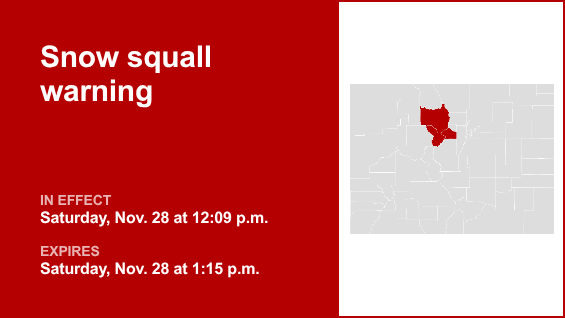
The National Weather Service released a snow squall warning at 12:09 p.m. on Saturday in effect until 1:15 p.m. for Clear Creek, Grand and Summit counties.
“At 12:09 p.m., a dangerous snow squall was located 5 miles west of Loveland Pass, or 54 miles west of Denver, moving northeast at 50 mph,” states the NWS. “This includes Interstate 70 between mile markers 190 and 228.”
Locations impacted by the warning include Silverthorne, Frisco, Georgetown, Dillon, Silver Plume, Keystone, Loveland Pass, Bakerville, Berthoud Falls, Copper Mountain and Vail Pass.
“Dangerous and life-threatening travel conditions are expected to develop rapidly in the warning area,” adds the NWS. “Slow Down! Rapid changes in visibility and road conditions are expected with this dangerous snow squall. Be alert for sudden whiteout conditions. Wet roadways will quickly freeze. Black ice will cause roads, bridges and overpasses to become slick and dangerous. Slow down and be prepared for sudden loss of traction.”
Hazards include flash freeze on roads and rapidly falling visibility due to intense bursts of heavy snow and gusty winds. Wind gusts greater than 50 mph could knock down tree limbs and blow around unsecured objects.
Snow squalls: Risks, differences, and safety seasures
What are snow squalls?
Snow squalls are intense winter weather events often associated with strong cold fronts. They can quickly blanket roads with snow and ice, even without a major winter storm in the forecast. Typically lasting less than an hour and resulting in minor snow accumulation, these squalls can still be dangerous due to reduced visibility, gusty winds, and rapidly dropping temperatures. Unfortunately, these conditions have historically contributed to serious and sometimes fatal traffic accidents.
Understanding snow squalls vs. snowstorms
The main distinction between a snow squall and a snowstorm lies in their duration and intensity. Snow squalls are typically brief but intense, lasting around 30-60 minutes. In contrast, a snowstorm can stretch over several hours or even days
Snow squall warnings
Snow squall warnings are rapidly issued for specific areas, much like tornado or severe thunderstorm warnings. They offer crucial, localized information aimed at saving lives. If an alert for a snow squall is issued in your area, it’s best to postpone or avoid driving until the squall moves on.
Actions during a snow squall warning
In response to a snow squall warning, individuals should follow the guidelines provided by the NWS, which encompass the following key actions:
Avoid or delay travel: If a snow squall warning is issued for your vicinity, it’s advisable to postpone or refrain from motor travel until the squall has passed through your area. Highways and roads are particularly hazardous during snow squalls.
Reduce speed and increase visibility: If you find yourself already on the road during a snow squall, prioritize safety by reducing your speed. Turn on both your headlights and hazard lights to enhance visibility for yourself and other drivers.
Maintain safe distance: Ensure there is ample distance between your vehicle and the one ahead of you. This precaution is essential to account for reduced visibility and the potential unpredictability of road conditions during a squall.
Avoid abrupt braking: It’s also best not to slam on your brakes. With slick/icy roads, this could contribute to the loss of vehicle control and also increase the risk of a chain reaction crash.
Winter weather safety tips: For comprehensive guidelines on how to stay safe before, during, and after encountering winter weather conditions, visit the NWS Winter Weather Safety page. This resource offers valuable insights and precautions to help you navigate the challenges posed by winter weather effectively.
Prepare your vehicle: Before setting out on your journey, take proactive measures to prepare your vehicle for winter conditions. This includes checking your tires, brakes, and lights, and ensuring your vehicle’s fluids are topped up. A well-maintained vehicle is better equipped to handle the challenges of winter driving.
Emergency kit essentials: Ensure your vehicle is equipped with a comprehensive emergency kit, featuring essentials such as blankets, non-perishable food, water, a flashlight, and a first-aid kit. Don’t forget to add jumper cables, flares or a reflective triangle, an ice scraper, a car cell phone charger, a map, and cat litter or sand to enhance tire traction. These provisions can prove invaluable in the event of an unforeseen breakdown or emergency during your journey.
In conclusion, when faced with a snow squall warning, prioritizing personal safety and adhering to the NWS recommendations can significantly mitigate risks. By understanding, preparing, and staying vigilant, individuals can navigate these winter hazards with greater confidence and security.
Source: The National Weather Service