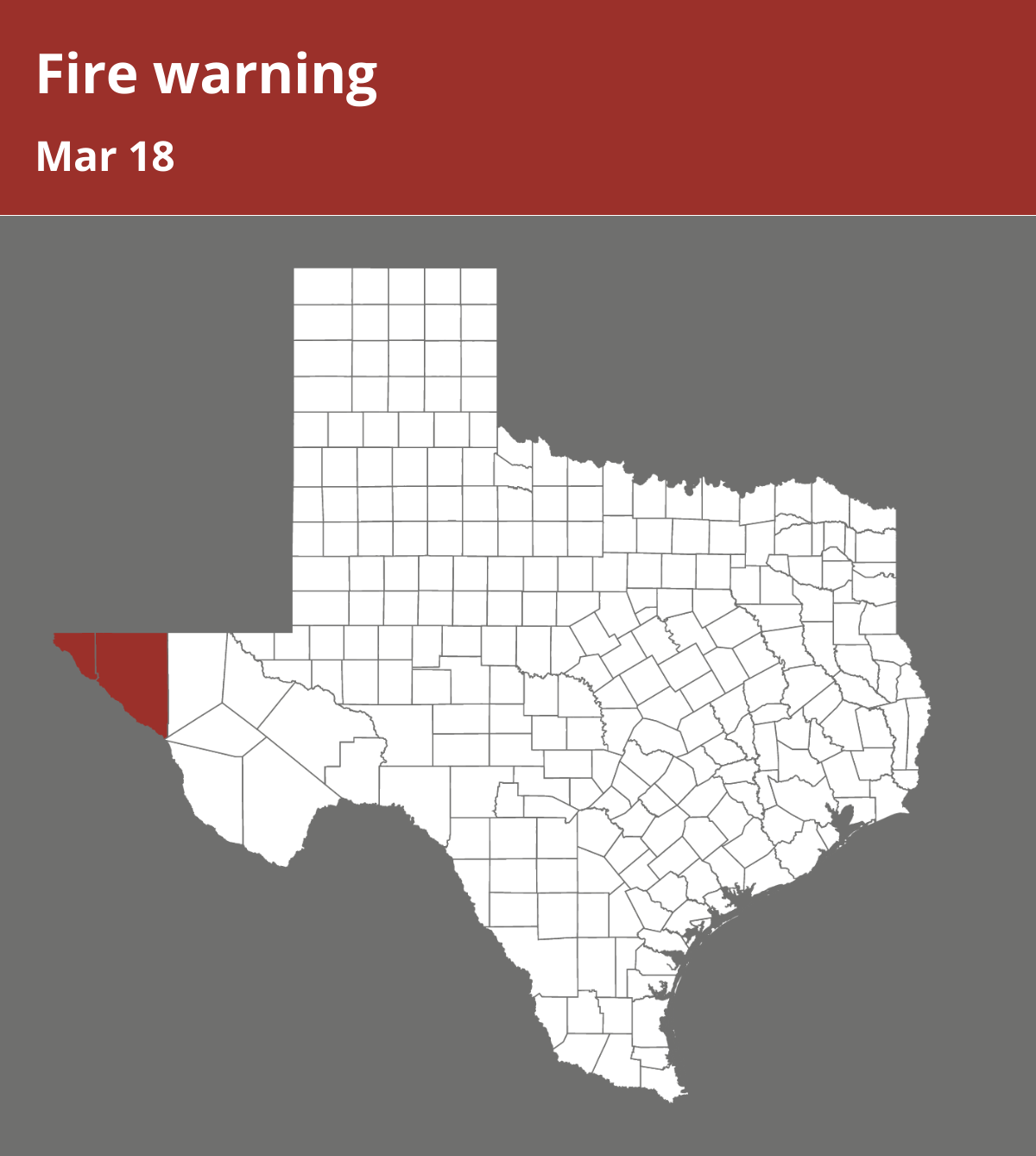
An updated red flag warning was issued by the National Weather Service on Tuesday at 9:07 a.m. valid between noon and 10 p.m. for El Paso and Hudspeth counties.
Winds are forecasted to be west 35 to 45 mph with gusts up to 65 mph and relative humidity lowlands 6 to 10 percent, mountains 12 to 15 percent, with higher values above 7500 feet.
“A passing weather system will bring very strong winds and dry conditions to Southern New Mexico and Far West Texas today. Relative humidity will drop into the teens and lower double digits by late morning, with single digits favored in lowland areas east of the Rio Grande, where overnight recovery was quite poor. Humidity values will remain low well into the evening. southwest to west winds will increase through the mid morning hours and will peak during the mid and late-afternoon hours, even extending into the evening. Sustained winds at and above 35 mph, with gusts exceeding 55 mph are expected. ERC values are well above average for mid March. Fire danger will be critical due to these weather conditions,” says the NWS. “Any fires that develop will likely spread rapidly. Outdoor burning is not recommended.”
What does a red flag warning indicate?
A red flag warning means that extreme fire weather conditions are either occurring now or will shortly, according to the NWS. Warm temperatures, very low humidities, and stronger winds are expected to combine to produce an increased risk of fire spreading rapidly.
What should you do under a red flag warning?
During a red flag warning, it is crucial to exercise extreme caution and be prepared to take immediate action in case a fire starts. The NWS offers these steps you can take to lower the risk of fires igniting and ensure your safety:
1. Secure burn barrels:
If burning is authorized in your vicinity, ensure that all burn barrels feature a weighted metal cover with holes no larger than 3/4 of an inch.
2. Responsible disposal of smoking materials:
Prudently discard cigarette butts and avoid flinging cigarettes or matches from a moving vehicle. These seemingly innocuous actions can kindle dry grass, potentially triggering a wildfire.
3. Prudent fire extinguishing practices:
To safeguard against accidental fires, diligently extinguish all outdoor fires. Drown them with an ample amount of water and stir to confirm that everything is cold to the touch. Submerge charcoal in water until it’s thoroughly cooled. Never dispose of live charcoal on the ground.
4. Never leave fires unattended:
Avoid leaving any fire unattended. Even sparks or embers carried by the wind can ignite nearby leaves or grass, triggering a fire that spreads rapidly.
Understanding the gravity of a red flag warning and adhering to these precautions is paramount in averting wildfires during these perilous conditions. Prioritize safety, stay impeccably informed, and assume responsibility to shield lives and property.
Source: The National Weather Service