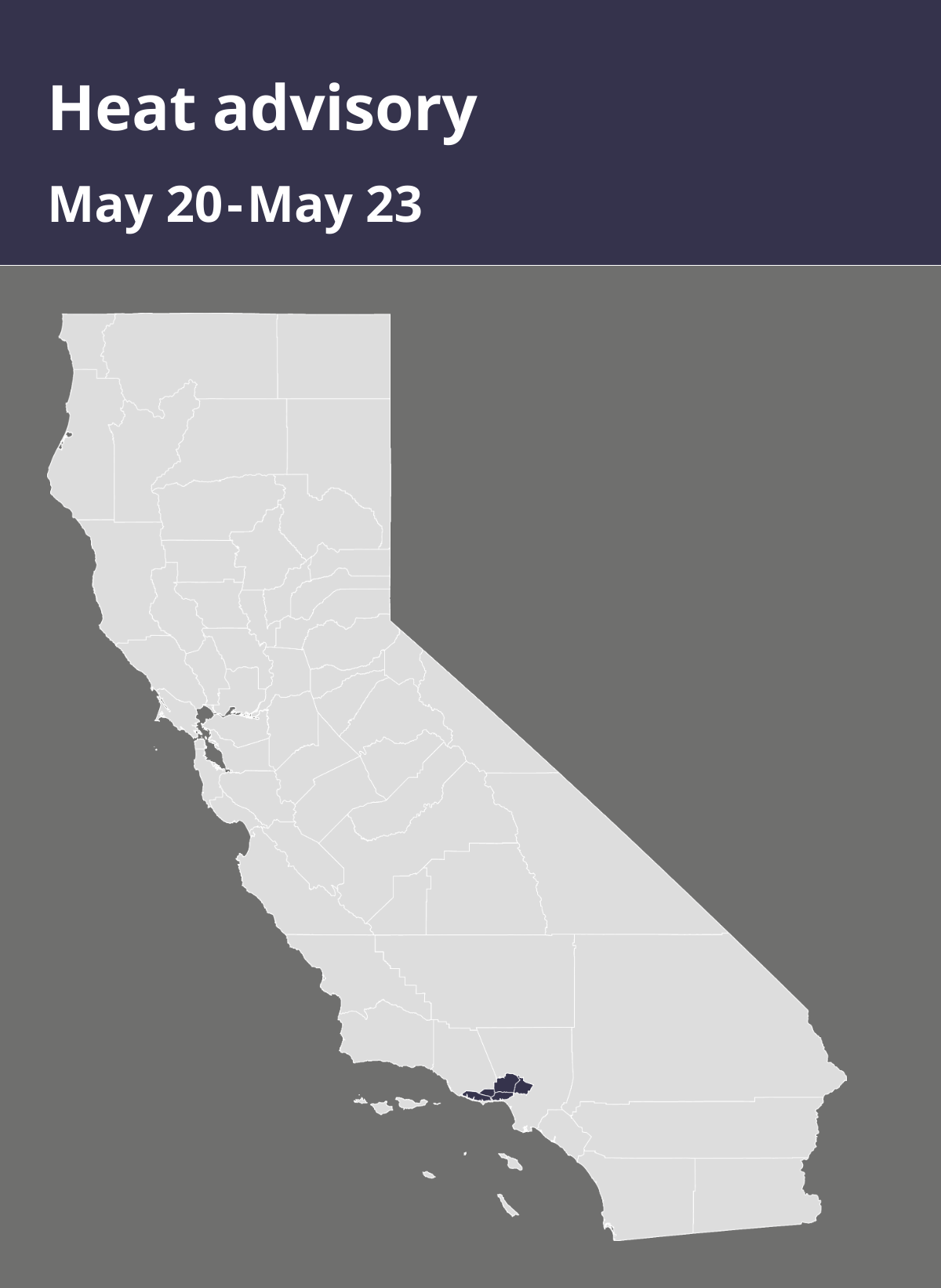
An updated heat advisory was released by the National Weather Service on Tuesday at 2:13 a.m. valid from 11 a.m. until Thursday 9 p.m. The advisory is for Western Santa Monica Mountains Recreational area, Eastern Santa Monica Mountains Recreational area, Calabasas and Agoura Hills, Western San Fernando Valley and Eastern San Fernando Valley.
The NWS states, “Temperatures up to 100 degrees expected.”
“There is a high risk for heat illness for sensitive populations including the very young, the very old, those without air conditioning, and those active outdoors,” says the NWS.
Mastering the heat: Guidelines for staying safe in high temperatures
• Stay hydrated: Keep yourself well-hydrated by drinking plenty of fluids.
• Seek cool shelter: Opt for an air-conditioned room to stay comfortable.
• Avoid sun exposure: Stay out of the sun, and check up on relatives and neighbors.
• Child and pet safety: Take every precaution to never leave young children and pets alone in vehicles, especially in extreme heat when car interiors can quickly become hazardous.
• Caution outdoors: When working or spending time outside, take extra precautions.
• Select the ideal time: Whenever possible, reschedule strenuous activities to early morning or evening hours when temperatures are more manageable.
• Recognize heat-related issues: Educate yourself about the signs and symptoms of heat exhaustion and heat stroke.
• Stay cool with clothing: Wear lightweight, loose-fitting clothing to stay comfortable.
Additional recommendations for outdoor workers:
• For outdoor workers, the Occupational Safety and Health Administration (OSHA) recommends regular rest breaks in shaded or air-conditioned areas.
• If someone succumbs to the heat, promptly relocate them to a cool, shaded location.
• In emergencies, call 911 for immediate assistance.
These NWS heat safety recommendations are vital for your well-being during periods of high temperatures. Stay informed and take the necessary steps to protect yourself and others from the heat’s potentially dangerous effects.
Source: The National Weather Service