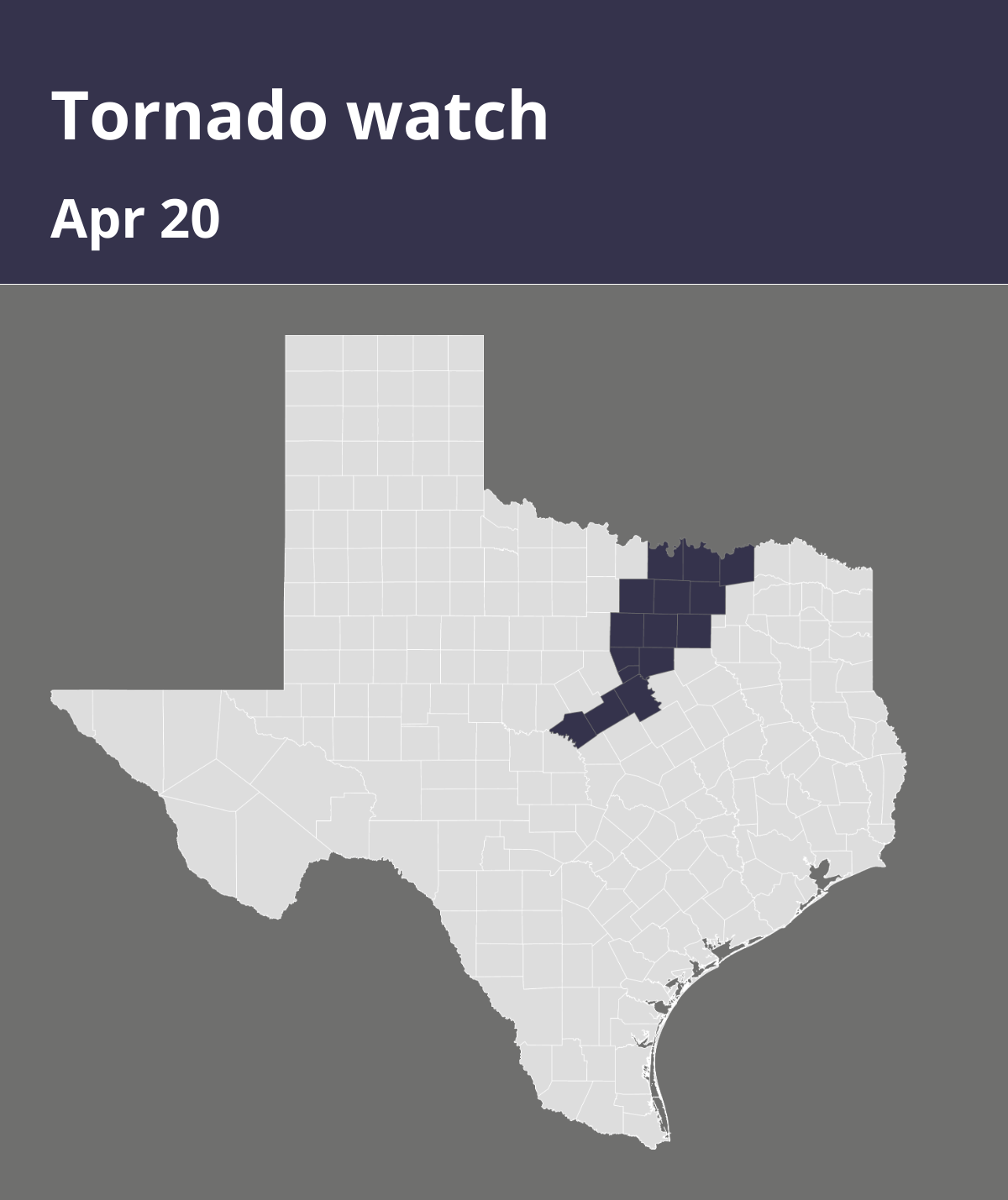
An updated tornado watch was issued by the National Weather Service on Sunday at 3:26 a.m. in effect until 7 a.m. The watch is for Bosque, Collin, Cooke, Dallas, Denton, Fannin, Grayson, Hamilton, Hood, Johnson, Mills, Parker, Somervell, Tarrant and Wise counties.
Tornado watches and warnings: Your safety guide
When it comes to tornadoes, understanding the distinction between a Tornado watch and a Tornado warning can be a matter of life and death. Here’s a breakdown:
Tornado watch: Be prepared!
• A Tornado watch is your advance warning that conditions are ripe for tornado formation.
• It’s your cue to review and discuss your emergency plans, check your supplies, and locate your safe room.
• While it doesn’t indicate an imminent tornado, it’s a heads-up to be prepared to take swift action if a Tornado warning is issued or if you suspect a tornado is approaching.
• Tornado Watches are issued by the Storm Prediction Center and often encompass a broad area, potentially spanning multiple counties or even states.
Tornado warning: Take action!
• A Tornado warning means a tornado has been spotted or detected by weather radar.
• This is the real deal – there’s an immediate threat to life and property.
• Your response should be swift: move to an interior room on the lowest floor of a sturdy building, away from windows.
• If you’re in a mobile home, a vehicle, or caught outdoors, find the nearest substantial shelter and protect yourself from flying debris.
• Warnings are issued by your local forecast office and pinpoint a much smaller area, typically the size of a city or a small county, where a tornado has been identified, either by radar or by trained spotters and law enforcement.
Knowing the difference between these two alerts is essential in staying safe during tornado season. Stay informed, have a plan, and act promptly when danger approaches.
Prepare for a tornado
Stay weather-ready:
Keep an eye on the weather forecast to stay informed about tornado risks. Tune in to local news or a NOAA Weather Radio for updates on tornado watches and warnings
Sign up for alerts:
Familiarize yourself with your community’s warning systems. Some places have outdoor sirens, while others rely on media and smartphone alerts for severe storm notifications.
Establish a communication plan:
Create a family emergency plan that includes a designated meeting place and important contact information. If your home lacks a basement, identify a nearby safe building, like a church or a relative’s house, that you can reach quickly.
Choose a secure shelter:
Pick a safe room within your home, such as a basement, storm cellar, or an interior room on the lowest floor without windows.
Practice your plan:
Conduct regular family drills for severe thunderstorms so everyone knows what to do when a tornado threat arises. Ensure that all family members are aware of the safe location to seek shelter, and don’t forget about your pets if time permits.
Secure your home:
Consider reinforcing your safe room for added protection. You can find plans for fortifying an interior room on the Federal Emergency Management Agency website.
Extend a helping hand:
Encourage your neighbors and loved ones to prepare for possible tornadoes. Consider taking CPR training to be of assistance in case of injuries.
What to do when a tornado strikes
When a tornado strikes, taking swift action is crucial to ensuring your safety and minimizing potential harm. Follow these guidelines from the NWS:
Stay informed:
Remain vigilant and stay updated by listening to local news broadcasts or a NOAA Weather Radio for tornado watches and warnings.
At home:
If you are at home and a tornado warning is issued, make your way to the basement, a designated safe room, or an interior space away from windows. Don’t forget to ensure the safety of your pets if time allows.
At work or school:
Follow your tornado drill and proceed to your tornado shelter location quickly and calmly. Stay away from windows and do not go to large open rooms such as cafeterias, gymnasiums, or auditoriums.
Outdoors:
If you’re outdoors and a tornado is approaching, seek immediate shelter inside a sturdy building. Sheds, storage facilities, mobile homes, and tents are not safe. If there’s time, make your way to a secure structure.
In a vehicle:
Being in a vehicle during a tornado is highly unsafe. Your best option is to drive to the nearest shelter. If reaching shelter is not possible, either stay inside your car, covering your head, or abandon the vehicle and seek refuge in a low-lying area like a ditch or ravine.
Always keep in mind that taking swift action and following established safety procedures are crucial for your well-being when a tornado threat is imminent.
Source: The National Weather Service