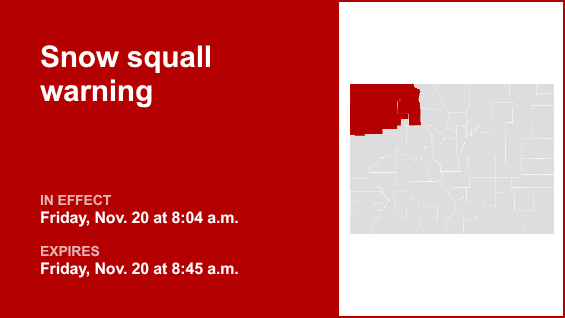
At 8:04 a.m. on Friday, the National Weather Service released a snow squall warning in effect until 8:45 a.m. for Moffat, Rio Blanco and Routt counties.
“At 8:04 a.m., a dangerous snow squall was located along a line from 27 miles north of Craig to 5 miles northeast of Meeker, or along a line from 27 miles north of Craig to 32 miles southwest of Craig, moving east at 40 mph,” explains the NWS. “Travel will become difficult and potentially dangerous within minutes.”
Locations impacted by the warning include Craig, Hayden, Hamilton, Lay, Loyd, Axial, Fortification, Juniper Springs and Great Divide.
The NWS states, “Slow Down! Rapid changes in visibility and road conditions are expected with this dangerous snow squall. Be alert for sudden whiteout conditions. Wet roadways will quickly freeze. Black ice will cause roads, bridges and overpasses to become slick and dangerous. Slow down and be prepared for sudden loss of traction.”
Hazards include flash freeze on roads and rapidly falling visibility due to intense bursts of heavy snow and gusty winds. Wind gusts greater than 35 mph.
Navigating snow squalls: Understanding, preparing, and staying safe
What are snow squalls?
Snow squalls are brief but intense winter weather events often linked to strong cold fronts. They can cause sudden white-out conditions and icy roads within minutes, even if there’s no major winter storm happening. While they usually last less than an hour and might only result in minor snow accumulation, they pose significant risks to drivers due to reduced visibility, gusty winds, and rapidly falling temperatures. These conditions have historically led to deadly traffic accidents.
Understanding snow squalls vs. snowstorms
The difference between a snow squall and a snowstorm is the duration of the event. Snow squalls are usually very short-lived (on the order of 30-60 minutes) and extremely intense. A snowstorm could last for several hours or even days.
Snow squall warnings
Snow squall warnings are rapidly issued for specific areas, much like tornado or severe thunderstorm warnings. They offer crucial, localized information aimed at saving lives. If an alert for a snow squall is issued in your area, it’s best to postpone or avoid driving until the squall moves on.
Actions during a snow squall warning
In response to a snow squall warning, individuals should follow the guidelines provided by the NWS, which encompass the following key actions:
Avoid or delay travel: If a snow Squall warning is issued for your area, avoid or delay motor travel until the squall passes through your location. There truly is no safe place on the highway during a snow squall.
Reduce speed and increase visibility: If you find yourself already on the road during a snow squall, prioritize safety by reducing your speed. Turn on both your headlights and hazard lights to enhance visibility for yourself and other drivers.
Maintain safe distance: Allow plenty of distance between you and the car in front of you.
Avoid abrupt braking: It’s also best not to slam on your brakes. With slick/icy roads, this could contribute to the loss of vehicle control and also increase the risk of a chain reaction crash.
Winter weather safety tips: For tips on how to stay safe before, during, and after winter weather, visit the NWS Winter Weather Safety page.
Prepare your vehicle: Prior to traveling, take steps to prepare your vehicle for winter conditions by inspecting tires, brakes, and lights, and confirming all fluids are at appropriate levels. A properly cared-for vehicle is more prepared to tackle the obstacles of winter driving.
Emergency kit essentials: Always have a well-prepared emergency kit in your vehicle containing crucial supplies like blankets, non-perishable food, water, a flashlight, and a first-aid kit. Additionally, include jumper cables, flares or a reflective triangle, an ice scraper, a car cell phone charger, a map, and cat litter or sand for improved tire traction. These items can be invaluable should you encounter an unexpected breakdown or emergency while on the road.
In conclusion, when faced with a snow squall warning, prioritizing personal safety and adhering to the NWS recommendations can significantly mitigate risks. By understanding, preparing, and staying vigilant, individuals can navigate these winter hazards with greater confidence and security.
Source: The National Weather Service