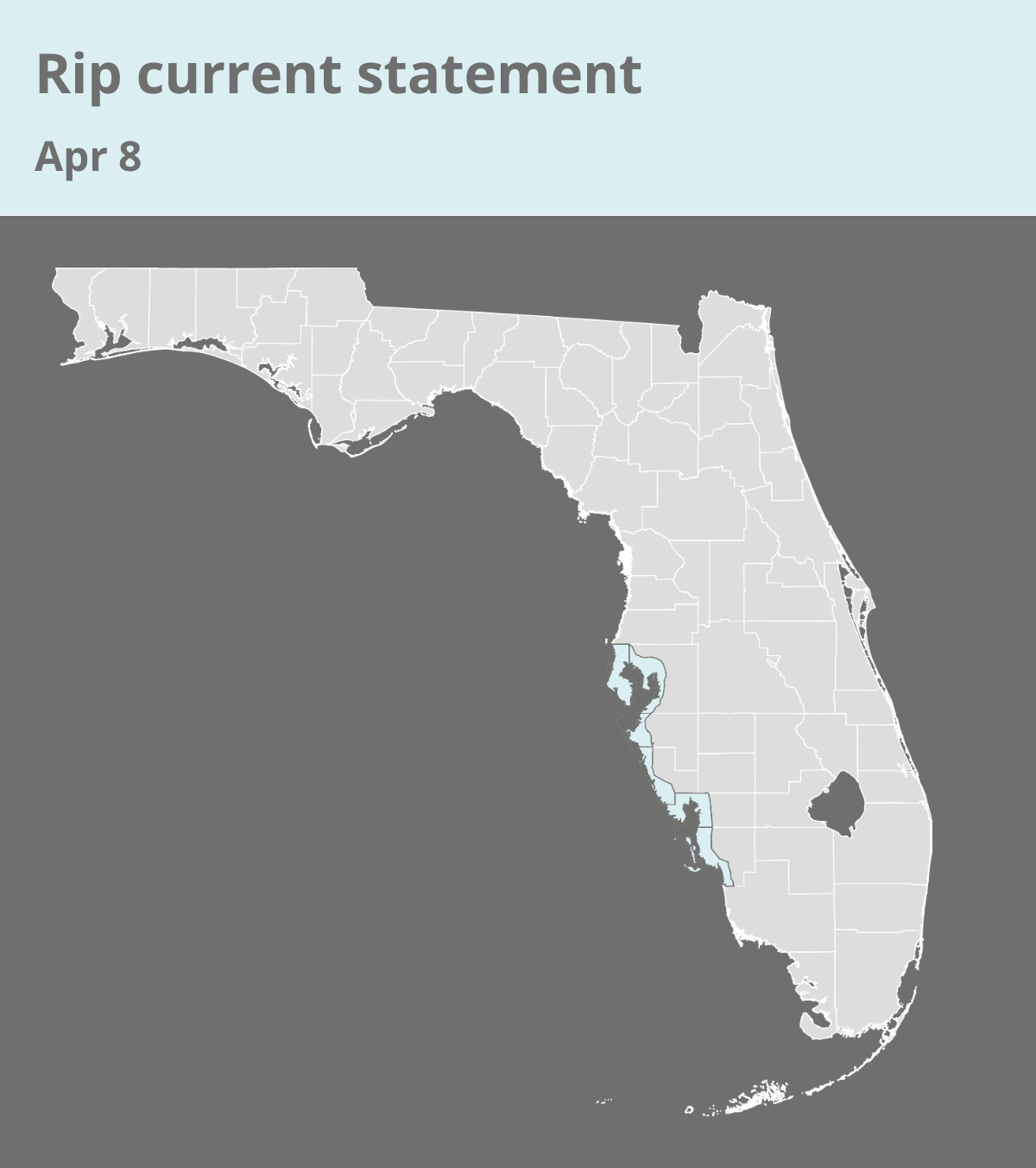
The National Weather Service released a rip current statement at 4:14 a.m. on Tuesday in effect until 8 p.m. The statement is for Coastal Hillsborough, Coastal Manatee, Coastal Sarasota, Coastal Charlotte and Coastal Lee as well as Pinellas County.
“Rip currents can sweep even the best swimmers away from shore into deeper water,” describes the NWS. “Swim near a lifeguard. If caught in a rip current, relax and float. Don’t swim against the current. If able, swim in a direction following the shoreline. If unable to escape, face the shore and call or wave for help.”
What to do if you get caught in a rip current?
Rip currents, those swift-moving channels of water flowing away from the shore at surf beaches, can pose a serious threat to beachgoers. These currents vary in speed and can swiftly become perilous for anyone venturing into the surf. Even strong swimmers can find themselves overpowered by the force of a rip current. It’s essential to know how to respond if you’re caught in one. Here’s what you need to do, based on guidance from the NWS:
Keep your cool – they won’t drag you under:
Your first rule of thumb: Keep a clear head. Rip currents won’t pull you beneath the water’s surface. Panic is your enemy; it depletes precious energy needed for your survival.
Don’t swim against the current:
Trying to swim directly toward the beach when caught in a rip current is futile and exhausting. The current is too strong. Instead, swim parallel to the shore and away from the rip current’s grip.
Call for help if necessary:
If you feel you can’t reach shore, relax, face the shore, and call or wave for help.
Seek lifeguarded beaches:
If at all possible, only swim at beaches with lifeguards.
Never brave the waves alone on unguarded shores:
If you choose to swim on beaches without a lifeguard, never swim alone. Take a friend and have that person take a cell phone so that person can call 911 for help.
Rip currents are formidable natural forces, but knowing how to react can significantly increase your chances of safely navigating these challenging waters. Stay informed, stay vigilant, and prioritize safety when enjoying the surf.
Source: The National Weather Service