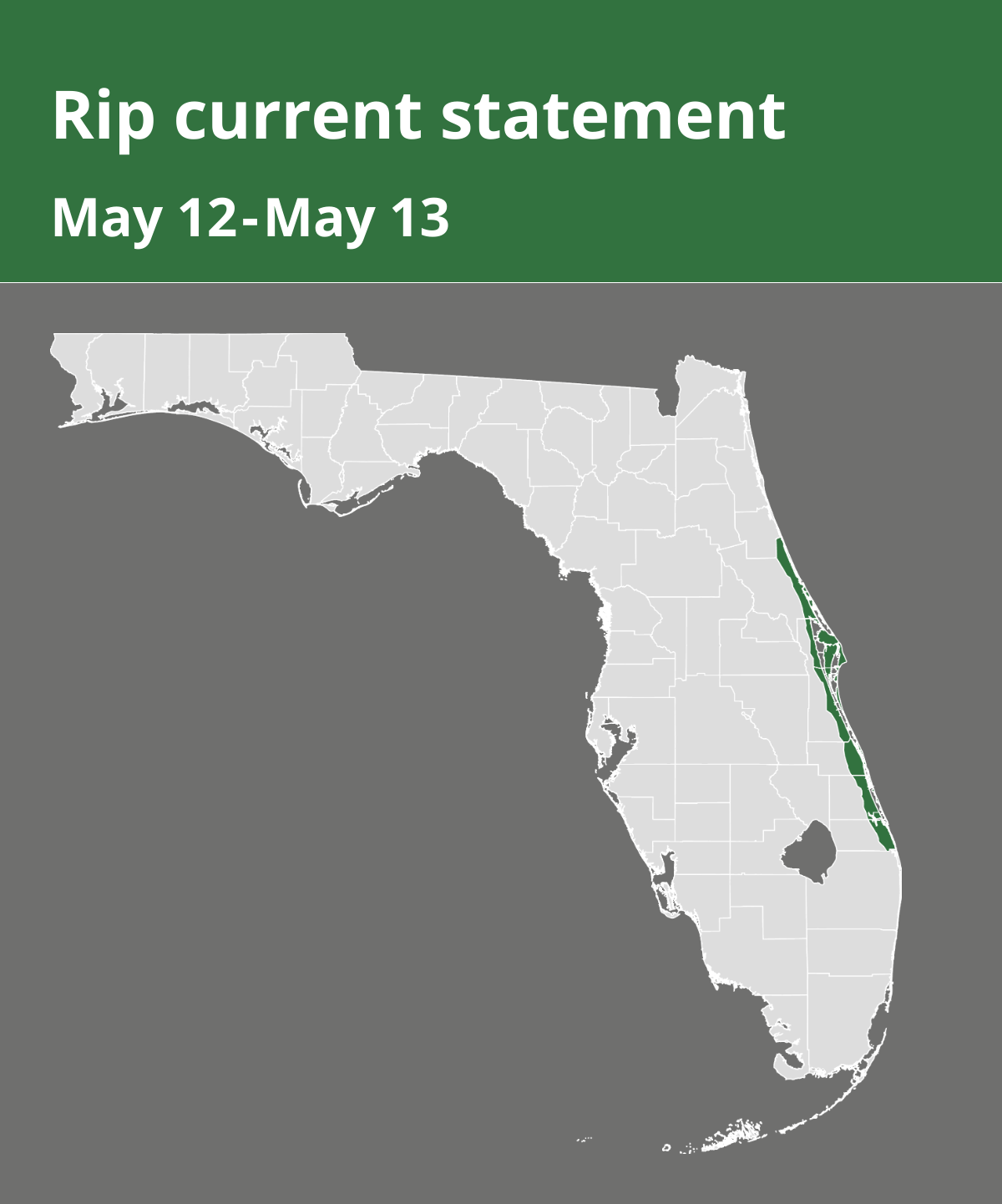
On Monday at 2:55 a.m. the National Weather Service issued an updated rip current statement in effect until Tuesday at 4 a.m. The statement is for Coastal Volusia, Coastal Indian River, Coastal St. Lucie, Coastal Martin, Mainland Northern Brevard, Northern Brevard Barrier Islands, Mainland Southern Brevard and Southern Brevard Barrier Islands.
“Rip currents can sweep even the best swimmers away from shore into deeper water,” adds the NWS. “Rip currents are powerful channels of water flowing quickly away from shore, which occur most often at low spots or breaks in the sandbar and in the vicinity of structures such as jetties and piers. Heed the advice of lifeguards, beach patrol flags and signs. Entering the surf is strongly discouraged. If caught in a rip current, relax and float. Don’t swim against the current. If able, swim in a direction following the shoreline. If unable to escape, face the shore and call or wave for help.”
What to do if you get caught in a rip current?
Rip currents are channelized currents of water flowing away from shore at surf beaches. The speeds can vary from moment to moment and can quickly increase to become dangerous to anyone entering the surf. Rip currents can sweep even the strongest swimmer away from shore. Trying to swim against a rip current will only use up your energy; the energy you need to survive and escape the rip current. If you get caught in a rip current, try to stay calm and follow the below advice from the NWS:
Keep your cool – they won’t drag you under:
Don’t panic – rip currents won’t pull you underwater.
Don’t swim against the current:
Trying to swim directly toward the beach when caught in a rip current is futile and exhausting. The current is too strong. Instead, swim parallel to the shore and away from the rip current’s grip.
Signal for help if necessary:
If you find yourself unable to make it back to shore, stay calm. Turn to face the shore, tread water, and signal for help by calling out or waving your arms. Rescuers are more likely to spot you.
Seek lifeguarded beaches:
If at all possible, only swim at beaches with lifeguards.
Never swim alone on unguarded beaches:
If you choose to swim on beaches without a lifeguard, never swim alone. Take a friend and have that person take a cell phone so that person can call 911 for help.
Rip currents are formidable natural forces, but knowing how to react can significantly increase your chances of safely navigating these challenging waters. Stay informed, stay vigilant, and prioritize safety when enjoying the surf.
Source: The National Weather Service