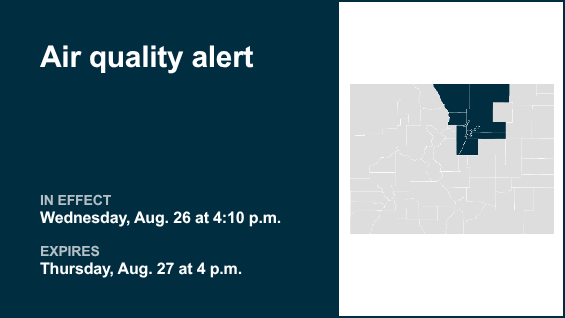
On Wednesday at 4:11 p.m. the National Weather Service reported an air quality alert in effect until Thursday at 4 p.m. for Central Colorado.
The NWS informs, “Ozone Action Day Alert.”
The full list of affected locations includes:
• Weld County
• Adams County
• Boulder County
• Jefferson County
• Denver County
• Douglas County
• Arapahoe County
• Larimer County
• Broomfield County
Air quality alerts: Recommendations from the NWS
When an air quality alert pops up on the radar, deciphering its implications is crucial. These alerts, issued by the NWS, come with straightforward yet essential guidance to ensure your safety:
Seek shelter indoors when possible:
If it’s within your means, stay indoors, especially if you have respiratory issues, health concerns, or fall within the senior or child demographics.
Minimize outdoor exposure:
When venturing outside becomes unavoidable, limit your outdoor exposure strictly to essential tasks. Reducing your time outdoors is the name of the game.
Scale back pollution-inducing practices:
Be conscious of activities that contribute to pollution, such as driving cars, using gas-powered lawnmowers, or relying on motorized vehicles. Curtail their use during air quality alerts.
Banish open burning:
Refrain from kindling fires with debris or any other materials during an air quality alert. Such practices only contribute to heightened air pollution.
Stay informed:
Stay updated of developments by tuning in to NOAA Weather Radio or your preferred weather news source. Being well-informed empowers you to make informed decisions regarding outdoor pursuits during air quality alerts.
Respiratory health caution:
If you have respiratory problems or underlying health conditions, exercise extra caution. These conditions can increase your vulnerability to adverse effects from poor air quality.
Following the recommendations from the NWS helps bolster your safety during air quality alerts, minimizing your exposure to potentially harmful pollutants. Stay vigilant, stay protected, and make your health the top priority.
Source: The National Weather Service