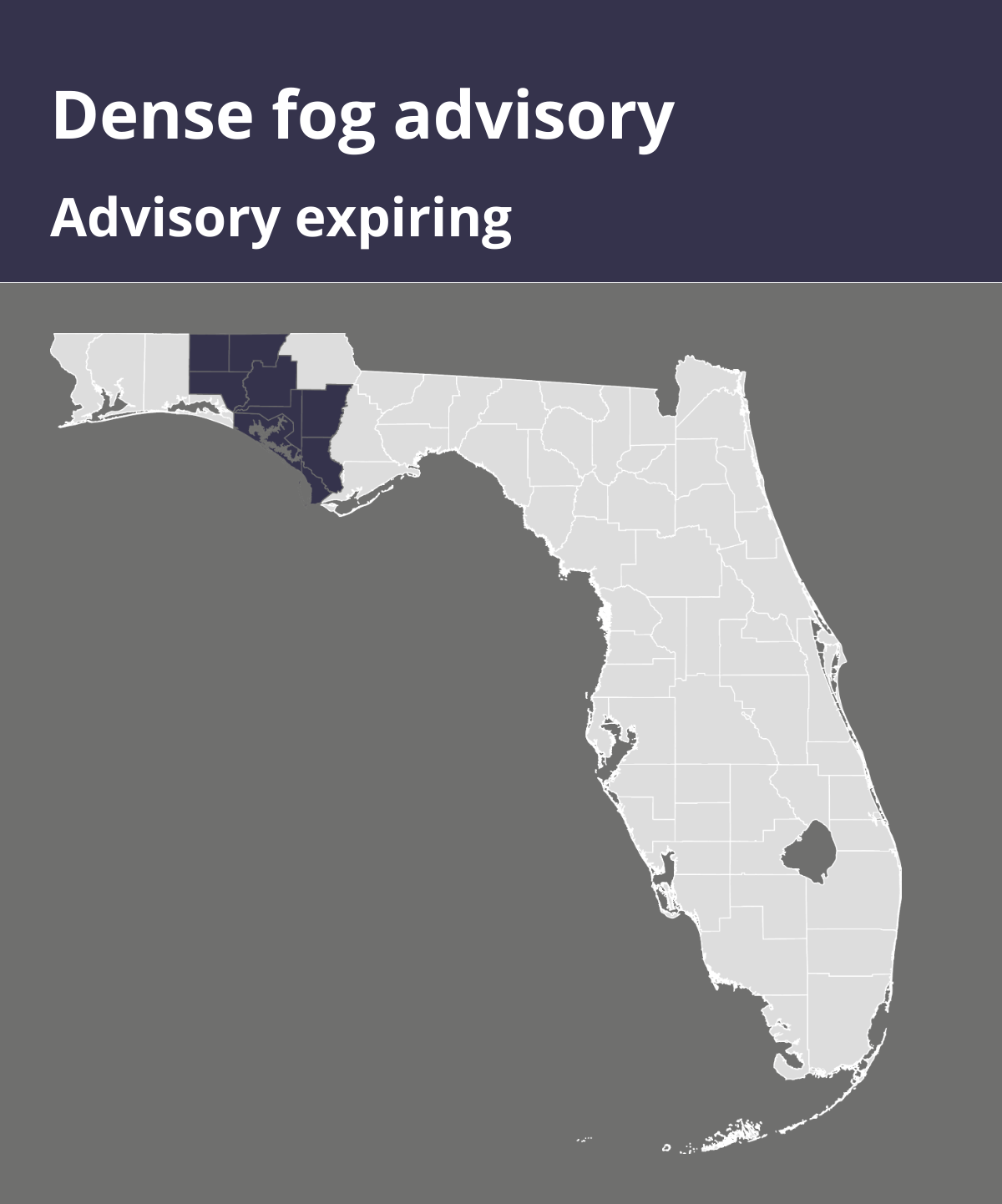
The advisory was in place for North Walton, Central Walton, Inland Bay, Inland Gulf, Coastal Bay and Coastal Gulf as well as Holmes, Washington and Calhoun counties.
“Widespread dense fog is quickly coming to an end based on webcams, satellite imagery, and area observations. Therefore, the Dense Fog Advisory will be allowed to expire. Patchy fog, lcoally dense in spots, remains possible for the next hour or so, and drivers should continue to use caution,” states the National Weather Service.
Fog safety: Tips from the NWS for safe travels
If a dense fog advisory is issued for your area, it means that widespread dense fog has developed and visibility often drops to just a quarter-mile or less. These conditions can make driving challenging, so exercise extreme caution on the road, and if possible, consider delaying your trip.
If you must drive in foggy conditions, keep the following safety tips in mind:
Reduce speed:
Slow down and allow extra travel time to reach your destination safely.
Visibility priority:
Ensure your vehicle is visible to others by using low-beam headlights, which also activate your taillights. If available, employ your fog lights.
Avoid high-beams:
Refrain from using high-beam headlights, as they create glare that impairs your visibility on the road.
Keep your distance:
Maintain a generous following distance to account for abrupt stops or shifting traffic patterns.
Stay in your lane:
To ensure you are staying in the correct lane, use the road’s lane markings as a guide.
Visibility near zero:
In situations of near-zero visibility due to dense fog, activate your hazard lights and seek a secure location, such as a nearby business’s parking lot, to pull over and come to a stop.
Limited parking options:
If no designated parking area is available, pull your vehicle as far off the road as possible. Once stationary, deactivate all lights except the hazard flashers, engage the emergency brake, and release the brake pedal to ensure your tail lights remain unlit, minimizing the chance of other drivers colliding with your stationary vehicle.
By adhering to these recommendations from the NWS, you can navigate foggy conditions with greater safety, mitigating the risk of accidents and prioritizing your well-being.
Source: The National Weather Service