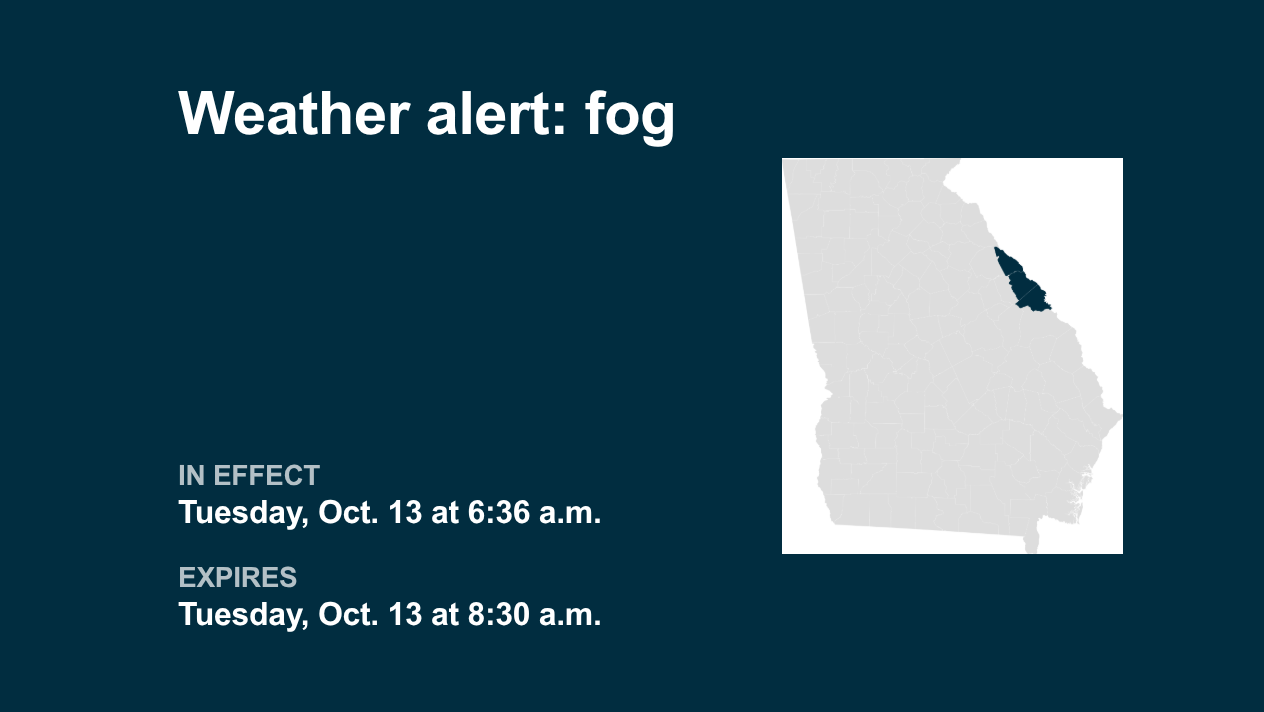
A weather alert was issued by the National Weather Service on Tuesday at 6:36 a.m. for reduced visibility and fog until 8:30 a.m. The alert is for Lincoln, Columbia and Richmond counties.
“Some patchy fog is developing along the Savannah River based on satellite and web cameras this morning. Use caution when driving near the river this morning as visibility may drop quickly,” says the NWS.
Fog safety: Tips from the NWS for safe travels
If you must venture out in foggy conditions, keep these safety tips from the NWS in mind:
Moderate your speed:
• Slow down and allocate extra time for your trip to reach your destination safely.
Visibility priority:
• Ensure your vehicle is visible to others by using low-beam headlights, which automatically activate your taillights. Utilize fog lights if your vehicle is equipped with them.
Avoid high-beams:
• Refrain from using high-beam lights, as they create glare, making it more difficult for you to see what’s ahead of you on the road.
Keep your distance:
• Maintain a significant following distance to account for abrupt stops or shifts in traffic patterns.
Stay in your lane:
• Use the road’s lane markings as a guide to remaining in the correct lane.
Zero visibility strategy:
• In cases of near-zero visibility due to dense fog, initiate your hazard lights and locate a secure spot, such as a nearby business parking area, to pull over and come to a halt.
Limited parking options:
• If there is no parking lot or driveway to pull into, pull your vehicle off to the side of the road as far as possible. Once you come to a stop, turn off all lights except your hazard flashing lights, set the emergency brake, and take your foot off of the brake pedal to be sure the tail lights are not illuminated so that other drivers don’t mistakenly run into you.
By adhering to these recommendations from the NWS, you can navigate foggy conditions with greater safety, mitigating the risk of accidents and prioritizing your well-being.
Source: The National Weather Service