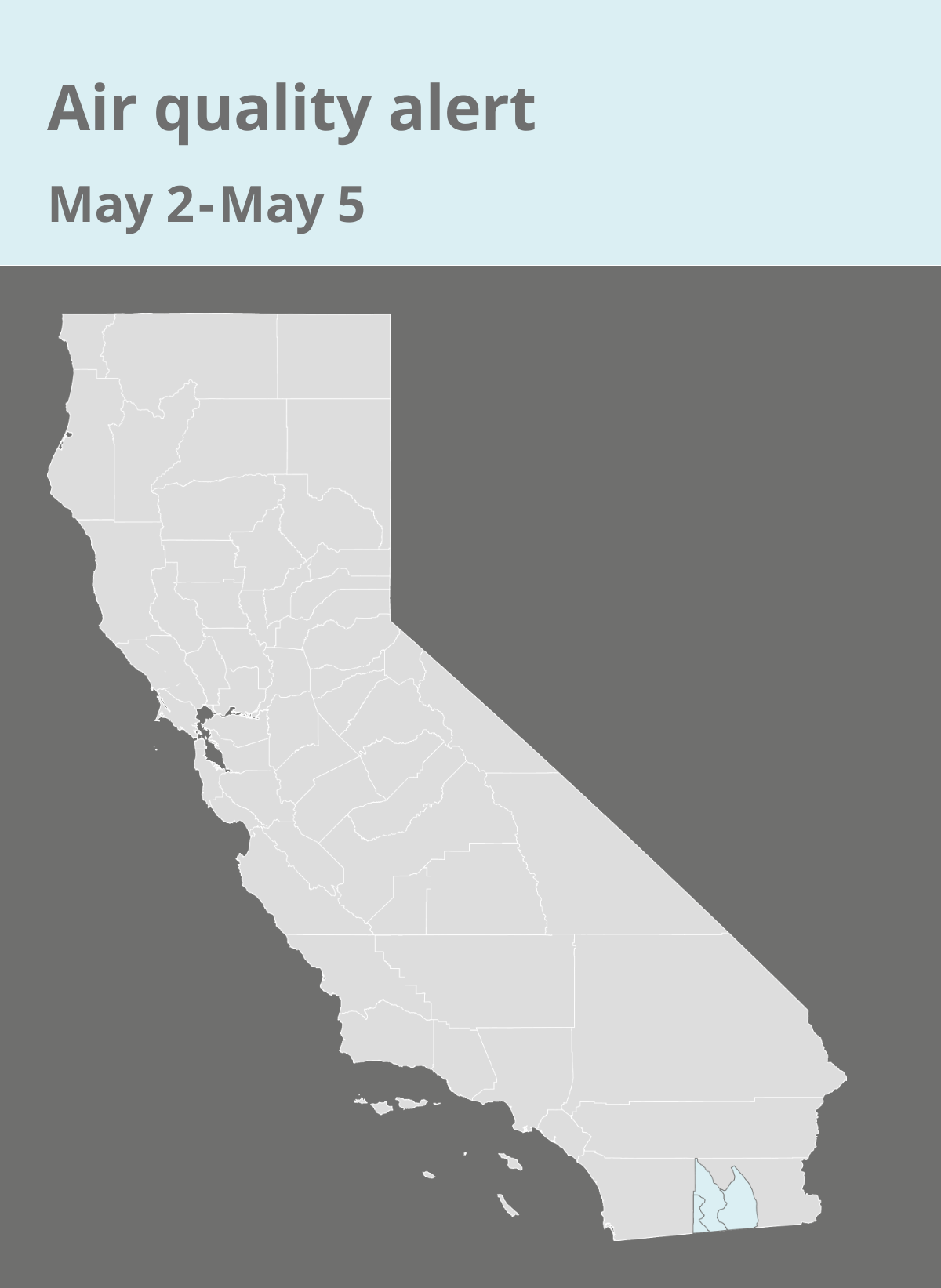
At 3:39 p.m. on Friday, the National Weather Service reported an air quality alert in effect until Monday at midnight. The alert is for Imperial County Southwest, Imperial County West and Imperial Valley.
The NWS says to expect, “The Imperial County APCD has issued an air quality alert due to harmful levels of particle pollution from windblown dust.”
“Particle pollution can get deep into the lungs and cause serious health problems such as asthma attacks, heart and lung disease symptoms, and increased risk of lung infections. Everyone can be affected, but sensitive groups such as people with lung or heart disease, older adults, people who are pregnant, children, and those who spend a lot of time outdoors are at greater risk,” explains the NWS.
Air quality alerts: Recommendations from the NWS
When an air quality alert pops up on the radar, deciphering its implications is crucial. These alerts, issued by the NWS, come with straightforward yet essential guidance to ensure your safety:
Prioritize indoor stay:
If you can, take refuge indoors, especially if you have respiratory concerns, underlying health conditions, or belong to the senior or child demographics.
Minimize outdoor ventures:
When venturing outside is unavoidable, restrict your time outdoors solely to essential activities. Reducing exposure is paramount.
Mitigate pollution sources:
Be mindful of activities that increase pollution, like driving cars, operating gas-powered lawnmowers, or using motorized vehicles. Limit their usage during air quality alerts.
A ban on open burning:
Refrain from igniting fires with debris or any other materials during air quality alerts. Such practices only contribute to the problem of poor air quality.
Stay informed:
Keep yourself well-informed by tuning in to NOAA Weather Radio or your preferred weather news outlet. Staying in the loop empowers you to make informed decisions regarding outdoor engagements during air quality alerts.
Prioritize respiratory health:
If you have respiratory problems or underlying health conditions, exercise extra caution. These conditions can increase your vulnerability to adverse effects from poor air quality.
By adhering to the advice from the NWS, you can enhance your safety during air quality alerts while reducing your exposure to potentially harmful pollutants. Stay aware, stay protected, and make your health a top priority.
Source: The National Weather Service