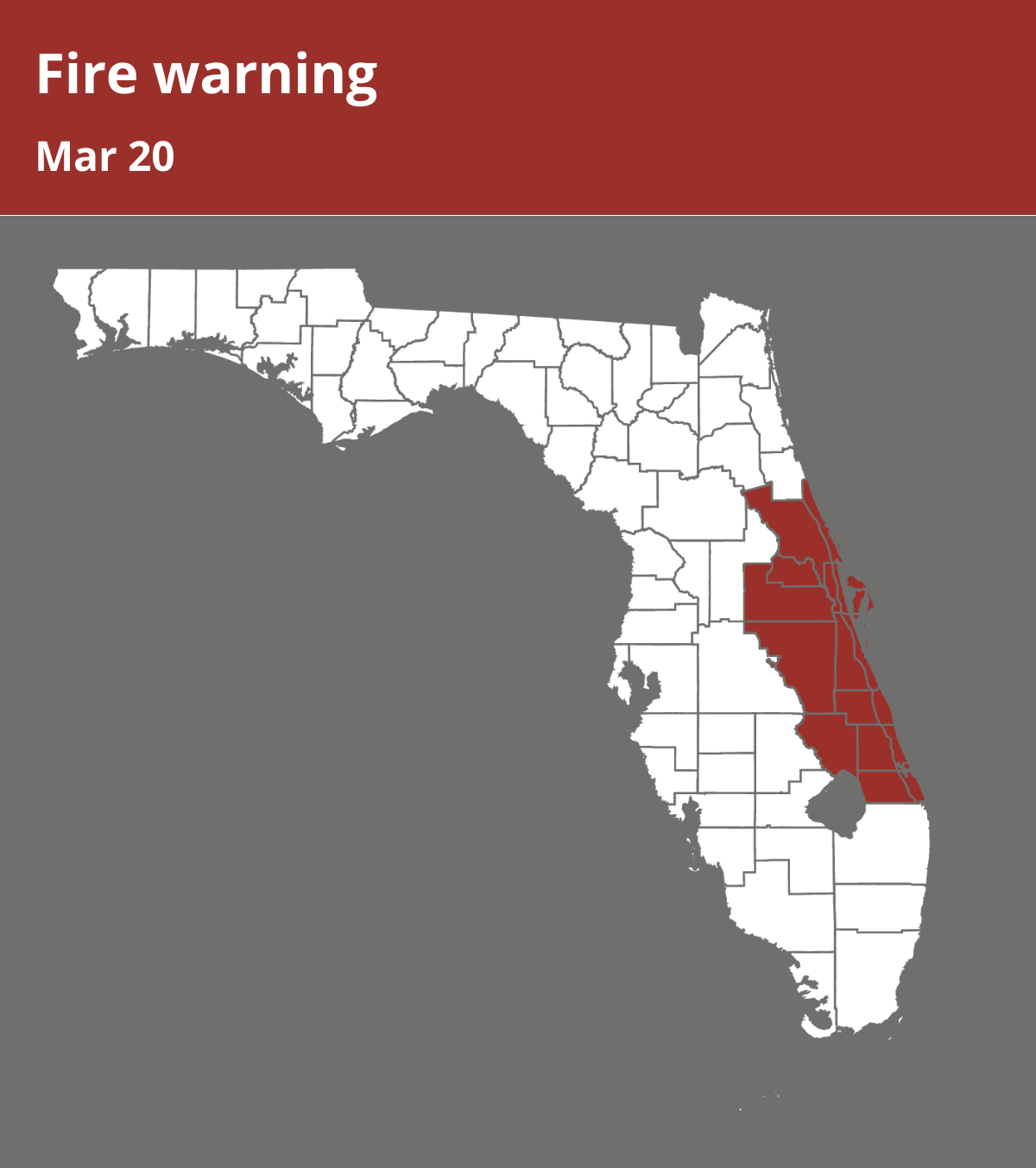
The National Weather Service issued a red flag warning at 4:37 p.m. on Thursday in effect until 8 p.m. The warning is for Inland Volusia, Coastal Volusia, Coastal Indian River, Coastal St. Lucie, Coastal Martin, Inland Northern Brevard, Inland Indian River, Inland St. Lucie, Inland Martin, Mainland Northern Brevard, Northern Brevard Barrier Islands, Inland Southern Brevard, Mainland Southern Brevard and Southern Brevard Barrier Islands as well as Orange, Seminole, Osceola and Okeechobee counties.
Expect winds to be west to southwest 15 to 20 mph with gusts up to 40 mph and humidity minimum values of 25 to 35 percent.
“Any fires that develop will likely spread rapidly. Outdoor burning is not recommended,” comments the NWS.
What does a red flag warning mean?
A red flag warning means that extreme fire weather conditions are either occurring now or will shortly, according to the NWS. Warm temperatures, very low humidities, and stronger winds are expected to combine to produce an increased risk of fire spreading rapidly.
What should you do under a red flag warning?
During a red flag warning, it is crucial to exercise extreme caution and be prepared to take immediate action in case a fire starts. The NWS offers these steps you can take to lower the risk of fires igniting and ensure your safety:
1. Secure burn barrels:
In areas where controlled burning is sanctioned, make certain that burn barrels sport a weighty metal cover, equipped with holes no larger than 3/4 of an inch.
2. Mindful disposal of smoking materials:
Prudently discard cigarette butts and avoid flinging cigarettes or matches from a moving vehicle. These seemingly innocuous actions can kindle dry grass, potentially triggering a wildfire.
3. Properly extinguish outdoor fires:
To thwart accidental fires, diligently extinguish all outdoor fires. Suffocate them with an ample deluge of water and stir to ensure complete cooling. Submerge charcoal in water until it’s entirely devoid of heat. Never leave live charcoal unattended.
4. Never desert a blaze:
Avoid abandoning any fire without supervision. Even minor sparks or drifting embers can incite nearby foliage or grass, setting off a rapidly spreading fire.
Understanding the gravity of a red flag warning and adhering to these precautions is pivotal in reducing the risk of wildfires during these hazardous conditions. Prioritize safety, stay informed, and act responsibly to protect lives and property.
Source: The National Weather Service