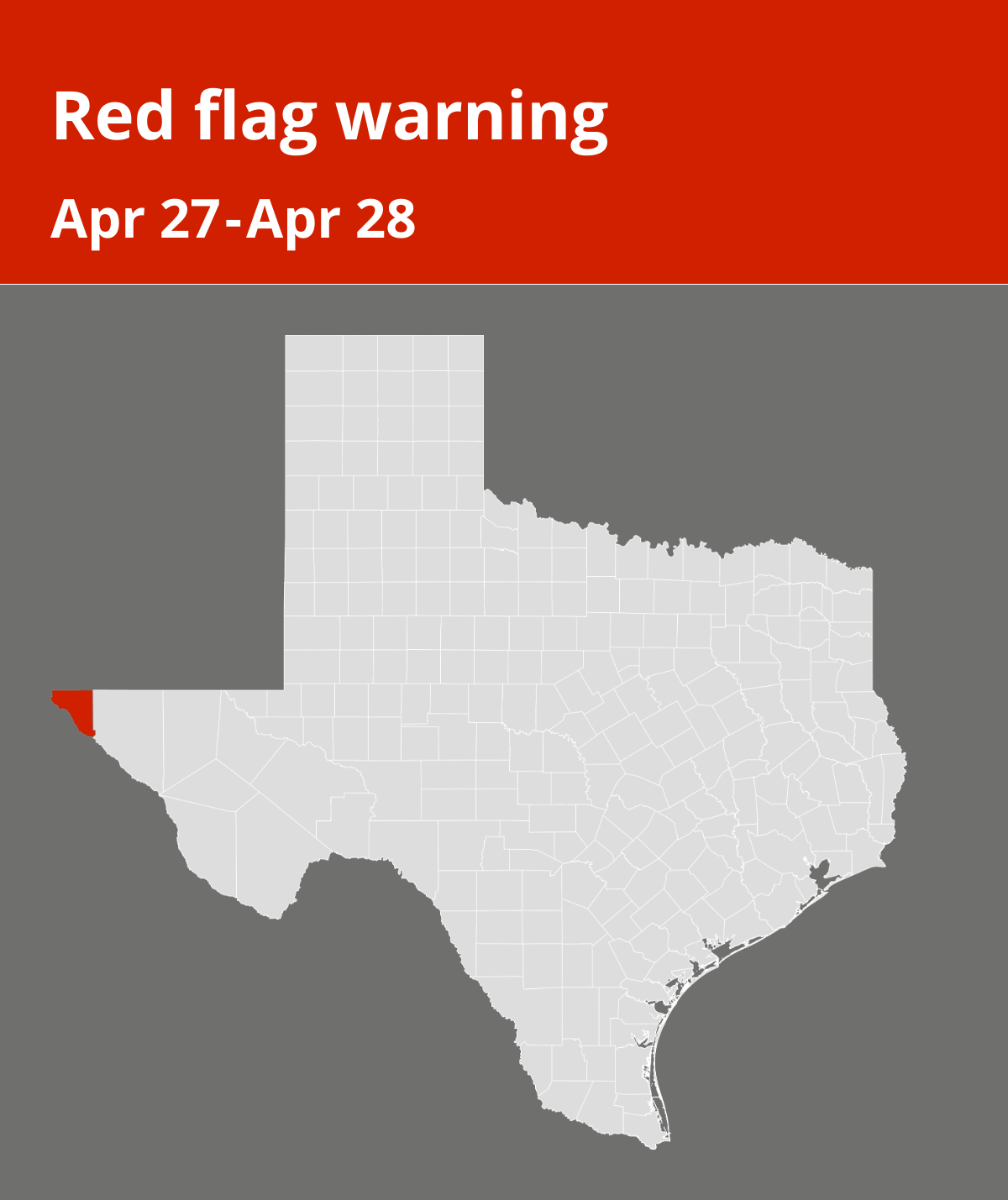
The National Weather Service issued a red flag warning at 1:27 p.m. on Friday valid for Sunday between noon and 10 p.m. for El Paso County.
Winds are forecasted to be southwest 25 to 35 mph with gusts up to 60 mph and relative humidity as low as 5 percent.
“An upper-level low will move through the Great Basin on Sunday, which will steer the jet stream across New Mexico during the afternoon. Meanwhile, a surface low will develop over eastern Colorado increasing winds across the area. These strong winds will combine with very low relative humidity at all elevations and very dry fuels to create critical to extreme fire weather conditions Sunday afternoon. The Fire Weather Watch is no longer in effect,” says the NWS. “Any fires that develop will likely spread rapidly. Outdoor burning is not recommended.”
What is the significance of a red flag warning?
A red flag warning signifies that either extreme fire weather conditions are currently in effect or will be shortly, as stated by the NWS. Warm temperatures, very low humidities, and stronger winds are expected to combine to produce an increased risk of fire to spread rapidly.
What should you do under a red flag warning?
During a red flag warning, it is crucial to exercise extreme caution and be prepared to take immediate action in case a fire starts. The NWS offers these steps you can take to lower the risk of fires igniting and ensure your safety:
1. Bolster burn barrel safety:
In areas where controlled burning is sanctioned, make certain that burn barrels sport a weighty metal cover, equipped with holes no larger than 3/4 of an inch.
2. Mindful handling of smoking materials:
Never discard lit cigarette butts outside, and avoid tossing cigarettes or matches from a moving vehicle. These seemingly small actions can lead to dry grass ignition, potentially sparking a wildfire.
3. Prudent fire extinguishing practices:
To prevent inadvertent fires, diligently douse all outdoor fires. Quench them with a copious deluge of water and stir to guarantee complete cooling. Submerge charcoal until it’s thoroughly bereft of residual heat. Never depart from live charcoal unattended.
4. Never desert a blaze:
Avoid abandoning any fire without supervision. Even minor sparks or drifting embers can incite nearby foliage or grass, setting off a rapidly spreading fire.
Understanding the gravity of a red flag warning and adhering to these precautions is paramount in averting wildfires during these perilous conditions. Prioritize safety, stay impeccably informed, and assume responsibility to shield lives and property.
Source: The National Weather Service