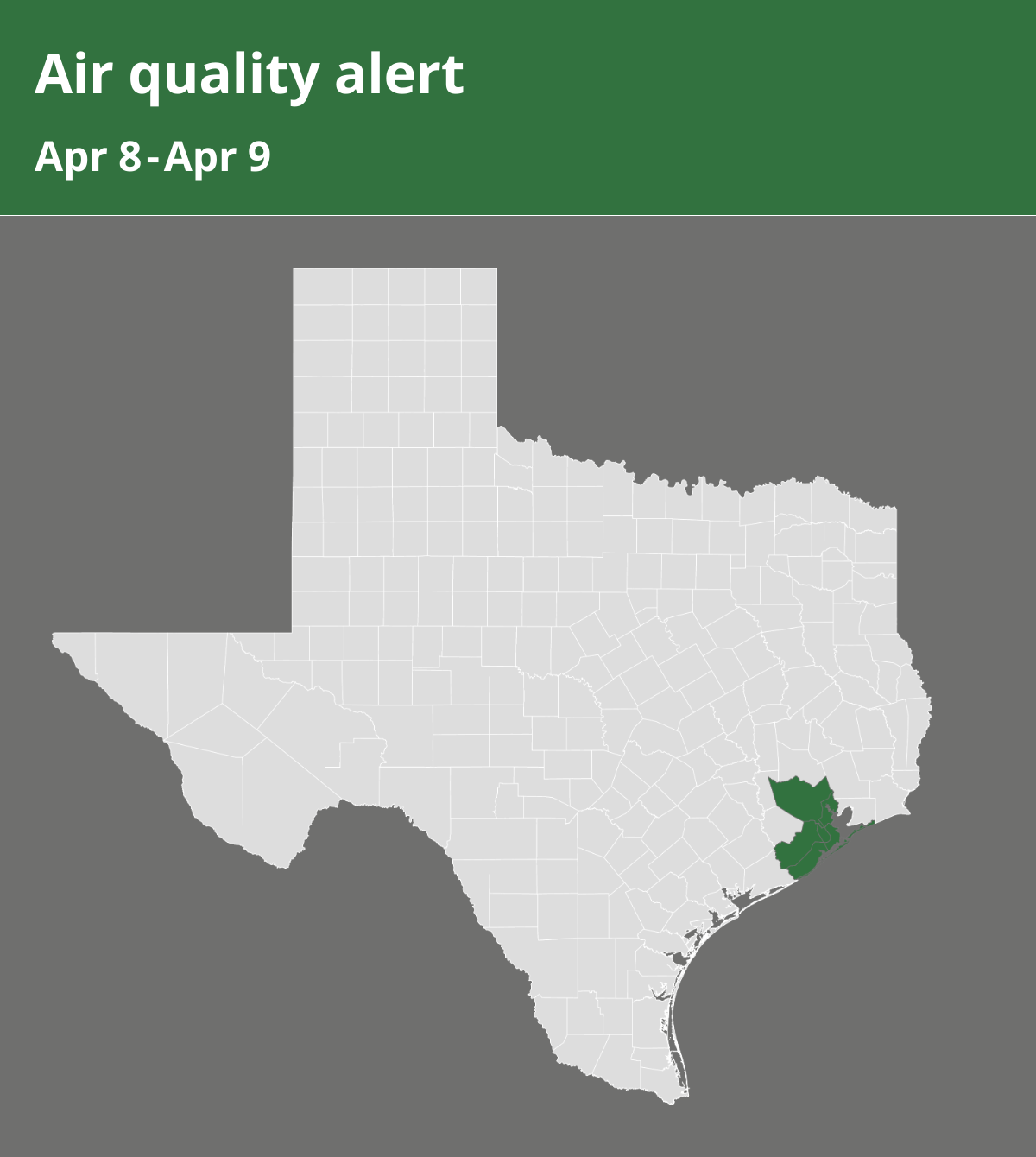
The National Weather Service reported an air quality alert at 2:01 p.m. on Tuesday in effect until Wednesday at 6:15 p.m. The alert is for Inland Harris, Inland Brazoria, Inland Galveston, Coastal Harris, Coastal Brazoria, Coastal Galveston, Brazoria Islands, Galveston Island and Bolivar Peninsula.
“The Texas Commission on Environmental Quality (TCEQ) has issued an Ozone Action Day for the Houston, Galveston, and Brazoria area for Wednesday, April 9, 2025. Atmospheric conditions are expected to be favorable for producing high levels of ozone pollution in the Houston, Galveston, and surrounding areas on Wednesday. You can help prevent ozone pollution by sharing a ride, walking, riding a bicycle, taking your lunch to work, avoiding drive through lanes, conserving energy and keeping your vehicle properly tuned,” according to the NWS.
Air quality alerts: Recommendations from the NWS
When an air quality alert is in effect, following the NWS guidance is pivotal. Here are some simple tips from the NWS for safeguarding your well-being:
Seek shelter indoors when possible:
Whenever possible, seek refuge indoors, especially if you grapple with respiratory concerns, health issues, or belong to the senior or child demographic
Minimize outdoor exposure:
When venturing outside is unavoidable, restrict your time outdoors solely to essential activities. Reducing exposure is paramount.
Tackle pollution sources:
Be conscious of activities that contribute to pollution, such as driving cars, using gas-powered lawnmowers, or relying on motorized vehicles. Curtail their use during air quality alerts.
Banish open burning:
Refrain from igniting fires with debris or any other materials during air quality alerts. Such practices only contribute to the problem of poor air quality.
Stay well-informed:
Stay updated of developments by tuning in to NOAA Weather Radio or your preferred weather news source. Being well-informed empowers you to make informed decisions regarding outdoor pursuits during air quality alerts.
Respiratory health caution:
If you have respiratory problems or underlying health conditions, exercise extra caution. These conditions can increase your vulnerability to adverse effects from poor air quality.
By adhering to the advice from the NWS, you can enhance your safety during air quality alerts while reducing your exposure to potentially harmful pollutants. Stay aware, stay protected, and make your health a top priority.
Source: The National Weather Service