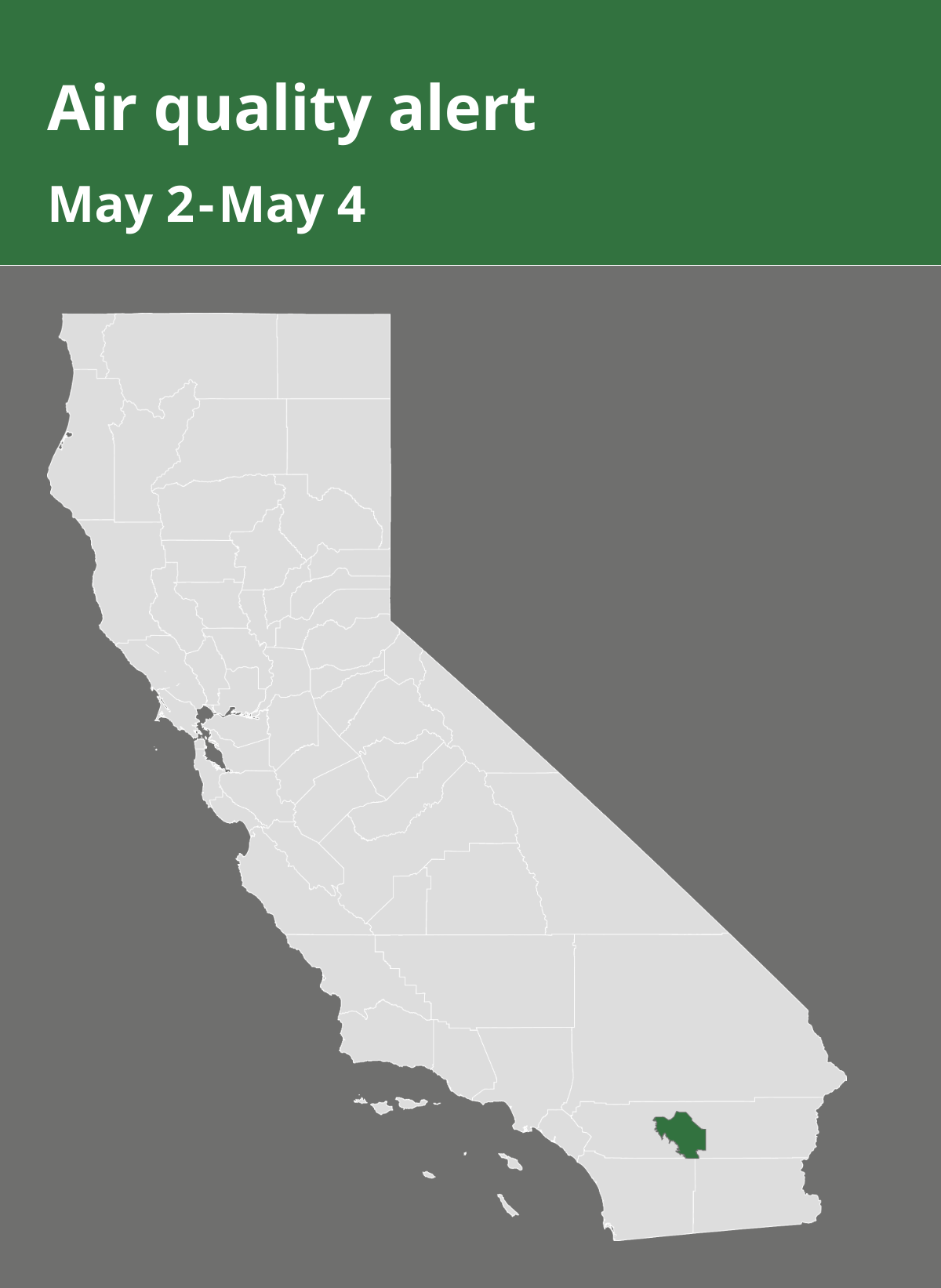
At 4:59 p.m. on Friday, the National Weather Service reported an air quality alert in effect until Sunday at 2 p.m. for Coachella Valley.
The NWS states to be ready for, “The South Coast AQMD has issued an air quality alert due to harmful levels of particle pollution from windblown dust.”
“Particle pollution can get deep into the lungs and cause serious health problems such as asthma attacks, heart and lung disease symptoms, and increased risk of lung infections. Everyone can be affected, but sensitive groups such as people with lung or heart disease, older adults, people who are pregnant, children, and those who spend a lot of time outdoors are at greater risk,” describes the NWS.
Guidance for air quality alerts: Insights from the NWS
When an air quality alert is in effect, following the NWS guidance is pivotal. Here are some simple tips from the NWS for safeguarding your well-being:
Retreat indoors whenever feasible:
If possible, remain indoors, especially if you have respiratory issues, other health concerns, or fall within the senior or child demographics.
Curb outdoor exposure:
When venturing outside is unavoidable, restrict your time outdoors solely to essential activities. Reducing exposure is paramount.
Reduce pollution contributors:
Be mindful of activities that exacerbate pollution, such as driving cars, operating gas-powered lawnmowers, or using other motorized vehicles. Limit their use during air quality alerts.
A no to open burning:
Avoid burning debris or any other materials during air quality alerts. This contributes to worsened air quality.
Stay well-informed:
Stay updated by tuning in to NOAA Weather Radio or your preferred weather news outlet. Staying informed helps you make wise choices regarding outdoor activities during air quality alerts.
Respiratory health caution:
If you have respiratory problems or underlying health conditions, exercise extra caution. These conditions can increase your vulnerability to adverse effects from poor air quality.
Following the recommendations from the NWS helps bolster your safety during air quality alerts, minimizing your exposure to potentially harmful pollutants. Stay vigilant, stay protected, and make your health the top priority.
Source: The National Weather Service