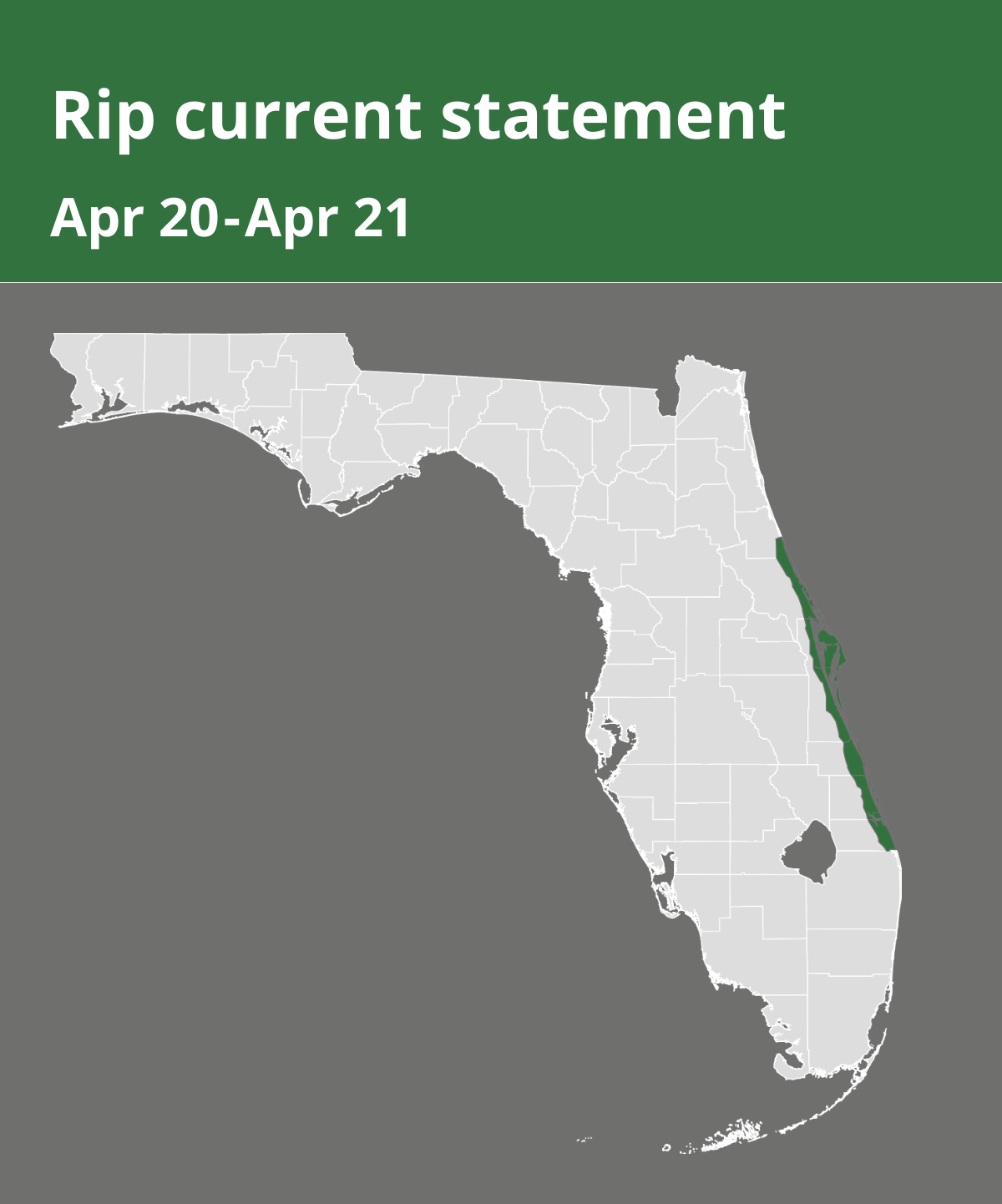
On Sunday at 1:32 a.m. the National Weather Service issued a rip current statement in effect until Monday at 4 a.m. The statement is for Coastal Volusia, Coastal Indian River, Coastal St. Lucie, Coastal Martin, Mainland Northern Brevard, Northern Brevard Barrier Islands, Mainland Southern Brevard and Southern Brevard Barrier Islands.
“Rip currents can sweep even the best swimmers away from shore into deeper water,” describes the NWS. “Rip currents are powerful channels of water flowing quickly away from shore, which occur most often at low spots or breaks in the sandbar and in the vicinity of structures such as jetties and piers. Heed the advice of lifeguards, beach patrol flags and signs. Entering the surf is strongly discouraged. If caught in a rip current, relax and float. Don’t swim against the current. If able, swim in a direction following the shoreline. If unable to escape, face the shore and call or wave for help.”
Navigating rip currents: Your survival manual
Rip currents, swift channels of water flowing away from the shore at surf beaches, can turn a day at the beach into a dangerous situation. Understanding how to respond when caught in one is crucial. The NWS offers these life-saving tips:
Stay calm – they won’t drag you under:
Your first rule of thumb: Keep a clear head. Rip currents won’t pull you beneath the water’s surface. Panic is your enemy; it depletes precious energy needed for your survival.
Don’t swim against the current:
Trying to swim directly toward the beach when caught in a rip current is futile and exhausting. The current is too strong. Instead, swim parallel to the shore and away from the rip current’s grip.
Call for help if necessary:
If you find yourself unable to make it back to shore, stay calm. Turn to face the shore, tread water, and signal for help by calling out or waving your arms. Rescuers are more likely to spot you.
Seek lifeguarded beaches:
Whenever feasible, choose beaches with lifeguards on duty. Their trained eyes and rapid response can be a lifesaver in water emergencies.
Never swim alone on unguarded beaches:
If you choose to swim at beaches without lifeguards, make it a rule never to swim solo. Always bring a friend, and ensure that person has a cell phone to call 911 in case of an emergency.
With these insights into rip currents and how to react, you can enhance your safety when enjoying the beach. Stay informed, stay vigilant, and prioritize your well-being while relishing the surf.
Source: The National Weather Service