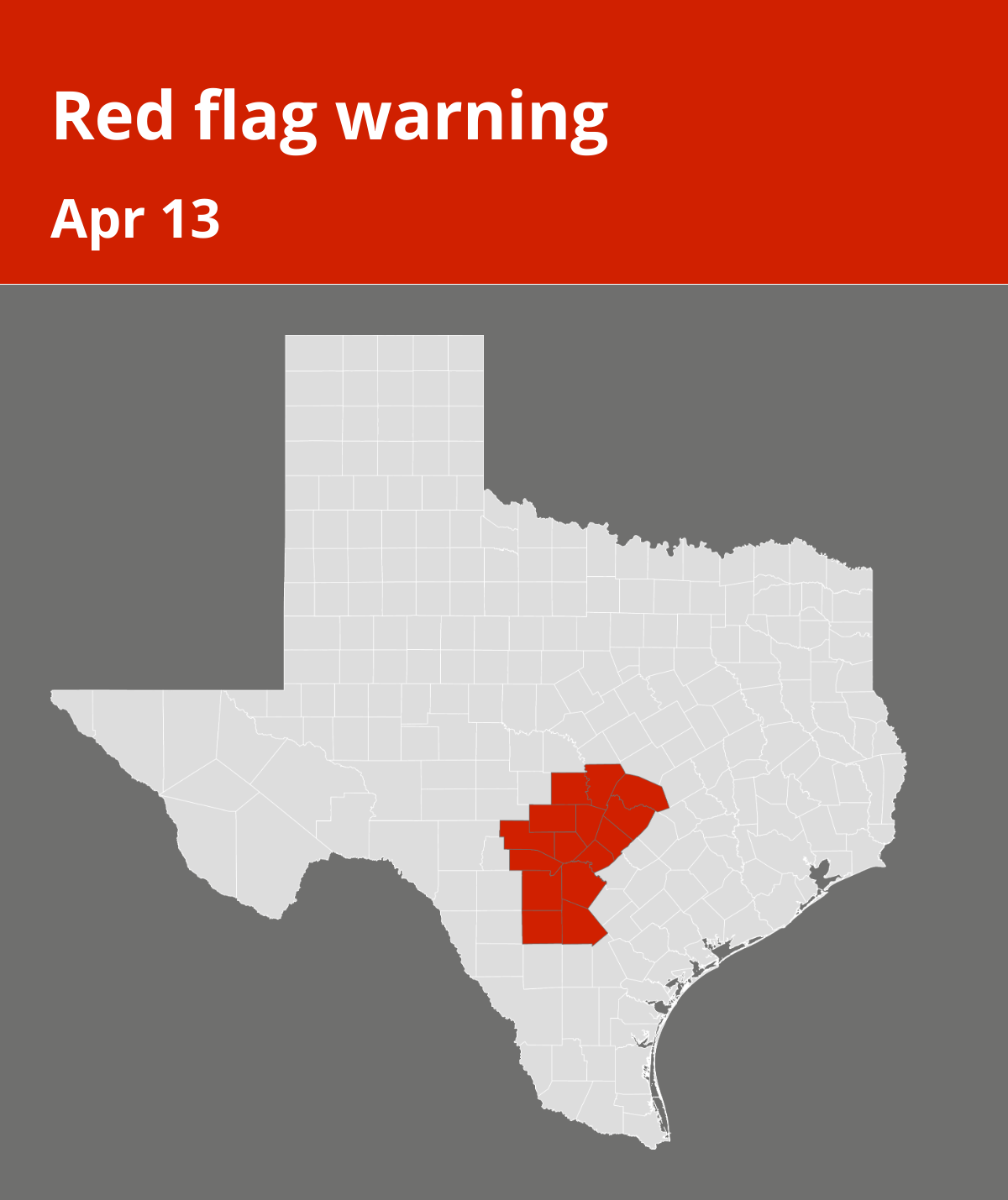
A red flag warning was released by the National Weather Service on Sunday at 1:50 a.m. valid between 1 p.m. and 10 p.m. The warning is for Llano, Burnet, Williamson, Kerr, Bandera, Gillespie, Kendall, Blanco, Hays, Travis, Medina, Bexar, Comal, Frio and Atascosa counties.
The NWS states that the warning was issued for wind and low relative humidity. Winds are forecasted to be south 20 to 25 mph with gusts up to 35 mph and relative humidity as low as 18 to 25 percent.
“Breezy southerly winds will occur today across South Central Texas, sustained around 15 to 25 mph with gusts around 35 mph. This will coincide with low afternoon humidity ranging from around 10 percent along the Rio Grande to 20 to 25 percent along the I-35 corridor. When combined with dry to extremely dry fuels, these wind and low humidity values will produce a period of critical fire weather conditions this afternoon and evening from the Rio Grande to the I-35 corridor,” states the NWS. “Any fires that develop will rapidly increase in size and intensity, move quickly, and be very difficult to control.”
What does a red flag warning indicate?
A red flag warning implies that either extreme fire weather conditions are currently taking place or will occur shortly, according to the NWS. Warm temperatures, very low humidities, and stronger winds are expected to combine to produce an increased risk of fire to spread rapidly.
What are the recommended measures to take during a red flag warning?
A red flag warning demands vigilance and immediate readiness to respond to potential fires. The NWS provides these vital guidelines to minimize fire hazards and ensure your safety:
1. Secure burn barrels:
In areas where controlled burning is sanctioned, make certain that burn barrels sport a weighty metal cover, equipped with holes no larger than 3/4 of an inch.
2. Mindful disposal of smoking materials:
Steer clear of haphazardly discarding lit cigarette butts and avoid flinging cigarettes or matches from moving vehicles. These innocuous-seeming actions can kindle dry vegetation, potentially spawning a wildfire.
3. Prudent fire extinguishing practices:
To safeguard against accidental fires, diligently extinguish all outdoor fires. Drown them with an ample amount of water and stir to confirm that everything is cold to the touch. Submerge charcoal in water until it’s thoroughly cooled. Never dispose of live charcoal on the ground.
4. Never desert a blaze:
Refrain from leaving any fire unattended. Even minor parks or embers might be carried into leaves or grass, kindling a fire that can swiftly expand.
Understanding the gravity of a red flag warning and adhering to these precautions is paramount in averting wildfires during these perilous conditions. Prioritize safety, stay impeccably informed, and assume responsibility to shield lives and property.
Source: The National Weather Service