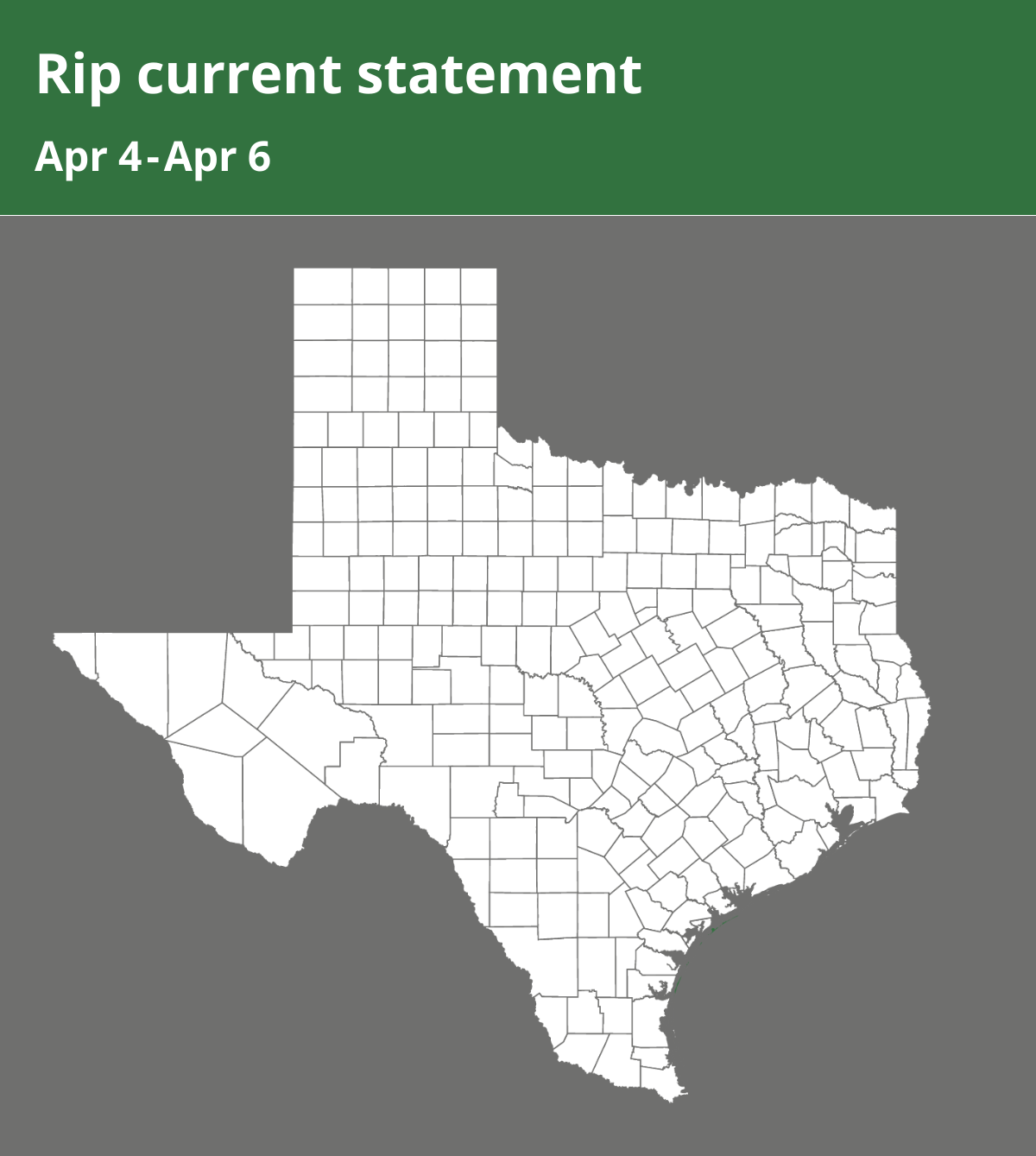
On Friday at 6:53 a.m. the National Weather Service issued an updated rip current statement in effect until Saturday at 7 p.m. The statement is for Aransas Islands, Kleberg Islands, Nueces Islands and Calhoun Islands.
“Flooding of lots, parks, and roads with only isolated road closures expected. Rip currents can sweep even the most experienced swimmers away from shore into deeper water. These rip currents can become life-threatening to anyone entering the surf,” comments the NWS. “If travel is required, allow extra time as some roads may be closed. Do not drive around barricades or through water of unknown depth. Take the necessary actions to protect flood-prone property. Swim near a lifeguard. If caught in a rip current, relax and float. Don’t swim against the current. If able, swim in a direction following the shoreline. If unable to escape, face the shore and call or wave for help.”
Caught in a rip: How to stay safe
Rip currents, those swift-moving channels of water flowing away from the shore at surf beaches, can pose a serious threat to beachgoers. These currents vary in speed and can swiftly become perilous for anyone venturing into the surf. Even strong swimmers can find themselves overpowered by the force of a rip current. It’s essential to know how to respond if you’re caught in one. Here’s what you need to do, based on guidance from the NWS:
Stay calm – they won’t drag you under:
Your first rule of thumb: Keep a clear head. Rip currents won’t pull you beneath the water’s surface. Panic is your enemy; it depletes precious energy needed for your survival.
Go with the flow, but not toward the beach:
Trying to swim directly toward the beach when caught in a rip current is futile and exhausting. The current is too strong. Instead, swim parallel to the shore and away from the rip current’s grip.
Call for help if necessary:
If you feel you can’t reach shore, relax, face the shore, and call or wave for help.
Seek lifeguarded beaches for added safety:
Whenever feasible, choose beaches with lifeguards on duty. Their trained eyes and rapid response can be a lifesaver in water emergencies.
Never swim alone on unguarded beaches:
If you decide to swim at beaches without lifeguards, establish a cardinal rule: never go solo. Always bring a companion, and ensure they have a cell phone to call 911 if needed.
Rip currents are formidable natural forces, but knowing how to react can significantly increase your chances of safely navigating these challenging waters. Stay informed, stay vigilant, and prioritize safety when enjoying the surf.
Source: The National Weather Service