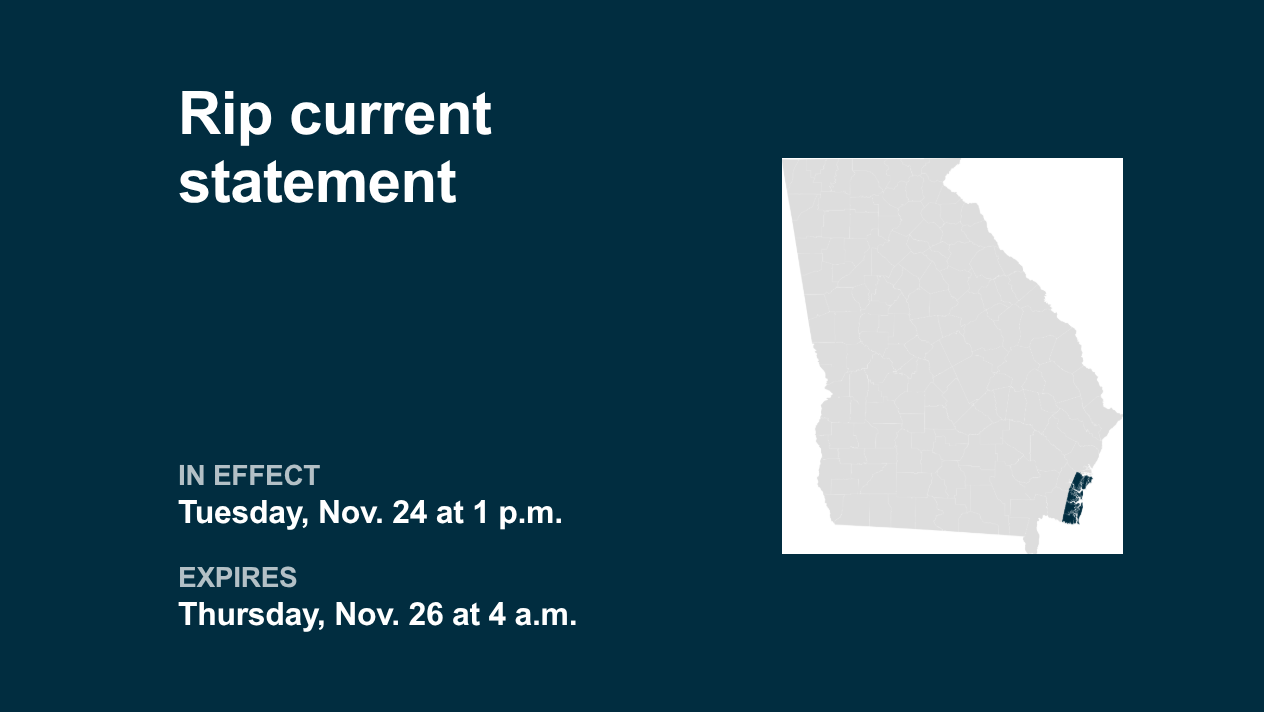
On Tuesday at 12:48 a.m. the National Weather Service issued a rip current statement valid from 1 p.m. until Thursday 4 a.m. for Coastal Glynn and Coastal Camden.
The NWS informs, “Dangerous rip currents expected.”
“Numerous roads may be closed. Low-lying property including homes, businesses, and some critical infrastructure will be inundated. Some shoreline erosion will occur. Rip currents can sweep even the best swimmers away from shore into deeper water,” comments the NWS. “Take the necessary actions to protect flood-prone property. If travel is required, do not drive around barricades or through water of unknown depth. Swim near a lifeguard. If caught in a rip current, relax and float. Don’t swim against the current. If able, swim in a direction following the shoreline. If unable to escape, face the shore and call or wave for help.”
Mastering rip currents: Your safety guide
Rip currents are channelized currents of water flowing away from shore at surf beaches. The speeds can vary from moment to moment and can quickly increase to become dangerous to anyone entering the surf. Rip currents can sweep even the strongest swimmer away from shore. Trying to swim against a rip current will only use up your energy; the energy you need to survive and escape the rip current. If you get caught in a rip current, try to stay calm and follow the below advice from the NWS:
Keep your cool:
Your first rule of thumb: Keep a clear head. Rip currents won’t pull you beneath the water’s surface. Panic is your enemy; it depletes precious energy needed for your survival.
Don’t swim against the current:
Don’t swim towards the beach against the rip current. Instead, swim parallel to the beach and out of the rip current.
Signal for help if necessary:
If you find yourself unable to make it back to shore, stay calm. Turn to face the shore, tread water, and signal for help by calling out or waving your arms. Rescuers are more likely to spot you.
Seek lifeguarded beaches:
Whenever possible, opt for beaches with lifeguards. Their watchful eyes and swift response can make all the difference in a water emergency.
Never brave the waves alone on unguarded shores:
If you decide to swim at beaches without lifeguards, establish a cardinal rule: never go solo. Always bring a companion, and ensure they have a cell phone to call 911 if needed.
With these insights into rip currents and how to react, you can enhance your safety when enjoying the beach. Stay informed, stay vigilant, and prioritize your well-being.
Source: The National Weather Service