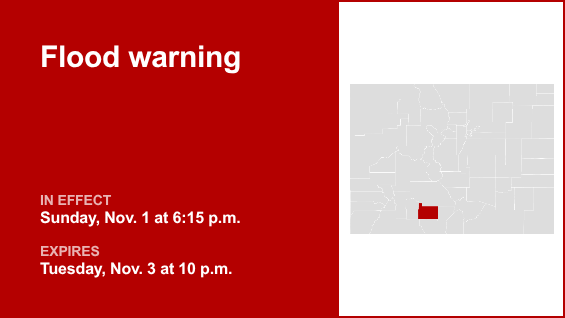
On Sunday at 8:09 a.m. a flood warning was released by the National Weather Service valid from 6 p.m. until Tuesday 10 p.m. for Rio Grande County.
The NWS informs, “Major flooding is forecast for Rio Grande near Del Norte.”
“At 7.5 feet, Major Flood. Water reaches base of Twin Mountain Bridge on Hanna Lane Road west of Del Norte,” says the NWS. “Motorists should not attempt to drive around barricades or drive cars through flooded areas. The next statement will be issued this evening at 8:15 p.m.”
Your guide to weather alerts: advisories, watches, and warnings
Flash flood warning: Take action.
A flash flood warning is issued when a flash flood is imminent or occurring. If you are in a flood-prone area, move immediately to high ground. A flash flood is a sudden violent flood that can take from minutes to hours to develop. It is even possible to experience a flash flood in areas not immediately receiving rain.
Flood warning: Take action.
A flood warning is issued when flooding is imminent or occurring.
Flood advisory: Be aware.
A flood advisory is released when flooding is not expected to reach a severity level necessitating a warning. Nonetheless, it can still cause considerable inconvenience and, without exercising caution, potentially lead to situations that threaten life and/or property.
Flood watch: Be prepared.
A flood watch is issued when conditions are favorable for flooding. It does not mean flooding will occur, but it is possible.
Staying safe during a flood: Recommendations from the NWS
In flood-prone regions or while camping in low-lying areas, understanding and following the NWS flood safety guidelines can be a lifesaver:
Move to higher ground:
If you reside in a flood-prone region or are camping in low-lying terrain, the first step to safety is relocating to higher ground.
Adhere to evacuation orders:
If local authorities issue an evacuation order, heed it promptly. Prior to leaving, secure your home by locking it.
Disconnect utilities and appliances:
If time permits, disconnect your utilities and appliances. This precaution minimizes electrical hazards during flooding.
Avoid basements and submerged areas:
Steer clear of basements or rooms where water has submerged electrical outlets or cords. This helps prevent electrical accidents.
Swift evacuation for your safety:
If you notice sparks or hear buzzing, crackling, snapping, or popping noises, evacuate immediately. Avoid any water that may be charged with electricity.
Stay away from floodwaters:
Never attempt to walk through floodwaters, even if they appear shallow. Just 6 inches of fast-moving water can forcefully sweep you off your feet.
Seek high ground if trapped:
Should you become trapped by moving water, reach the highest point possible and dial 911 to contact emergency services.
When heavy rain occurs, there is a risk of flooding, particularly in low-lying and flood-prone regions. It is important to never attempt to drive through water on the road, regardless of how deep it appears. According to the NWS, as little as 12 inches of rushing water can sweep away most vehicles. Stay safe by being prepared and informed.
Navigating heavy rain: Essential safety measures for wet roads
When heavy rain pours, the risk of flooding and treacherous roads rises. Here’s your guide from the NWS to staying safe during downpours:
Beware of swollen waterways:
In heavy rain, refrain from parking or walking near culverts or drainage ditches, where swift-moving water can pose a grave danger.
Maintain safe driving distances:
Use the two-second rule to maintain a safe distance from the car in front of you and allow an extra two seconds in heavy rain.
Slow down and stay cautious:
If it is raining and the roads are wet, slow down. Take your foot off the accelerator and let your speed drop gradually. Never use the brakes suddenly because this may cause the car to skid.
Choose your lane wisely:
Stick to the middle lanes on multi-lane roads to minimize the risk of hydroplaning, as water tends to accumulate in outer lanes.
Visibility matters:
Enhance your visibility in heavy rain by activating your headlights. Be particularly vigilant for vehicles in blind spots, as rain-smeared windows can obscure them.
Watch out for slippery roads:
The first half-hour of rain is when roads are slickest due to a mix of rain, grime, and oil. Exercise heightened caution during this period.
Keep a safe distance from large vehicles:
Large trucks and buses can reduce your visibility with tire spray. Avoid tailgating and pass with caution.
Mind your windshield wipers:
• Overloaded wiper blades can hinder visibility. If rain severely limits your sight, pull over and wait for conditions to improve. Seek refuge at rest areas or protected spots.
• If the roadside is your only option, pull off as far as possible, preferably past the end of a guard rail, and wait until the storm passes. Keep your headlights on and turn on emergency flashers to alert other drivers of your position.
By following these safety measures, you can significantly reduce risks and ensure your well-being when heavy rain pours down. Stay informed about weather conditions and heed advice from local authorities to make your journey safe and sound.
Source: The National Weather Service